
Micropholis gardneriana
Micropholis gardneriana
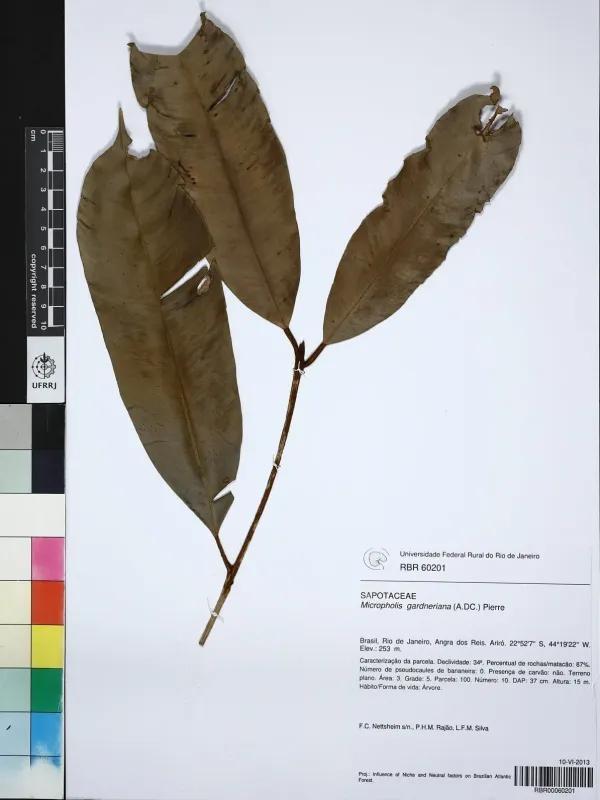
Description
Growing requirements
Micropholis gardneriana is a tree species belonging to the Sapotaceae family, native to tropical environments. It is characterized by a robust growth habit and a significant presence in the local ecosystems of its origin.
The climate requirements for this species are strict, necessitating high levels of humidity and warm temperatures year-round. It is adapted to environments where rainfall is abundant and stable throughout the seasonal cycle.
Regarding soil preferences, the plant thrives in deep, well-drained soils rich in organic matter. Proper drainage is essential to prevent root rot, which is a major limiting factor for growth in heavier soil types.
Botanically, the species is known for its durable wood and thick, coriaceous leaves. The architectural structure of the tree allows it to effectively compete for light in dense forest environments, ensuring its survival.
The primary use of the plant is in the timber industry, where its wood is valued for its density and structural integrity. It is often harvested locally for building purposes, highlighting its economic importance for rural communities.
Main diseases and pests
The survival of Micropholis gardneriana is threatened by habitat loss due to deforestation and agricultural expansion. These activities reduce the available space for the species to propagate naturally in the wild.
Pests such as boring insects can compromise the structural health of mature trees. These infestations often follow periods of physiological stress caused by climatic extremes or competition with invasive species.
Pathogenic fungi can affect the foliage and bark, especially in young plants growing in poorly managed nurseries. Maintaining adequate spacing and hygiene is essential for preventing the spread of such diseases.
Climate instability, particularly unpredictable drought events, can negatively impact the reproductive success of the tree. This reduces the number of viable seeds produced, slowing the growth of new populations.
Sustainable management practices are required to protect this species from over-exploitation. Conservation efforts should focus on reforestation and monitoring of existing populations to ensure their long-term viability in the forest ecosystem.