
Micranthocereus estevesii
Micranthocereus estevesii
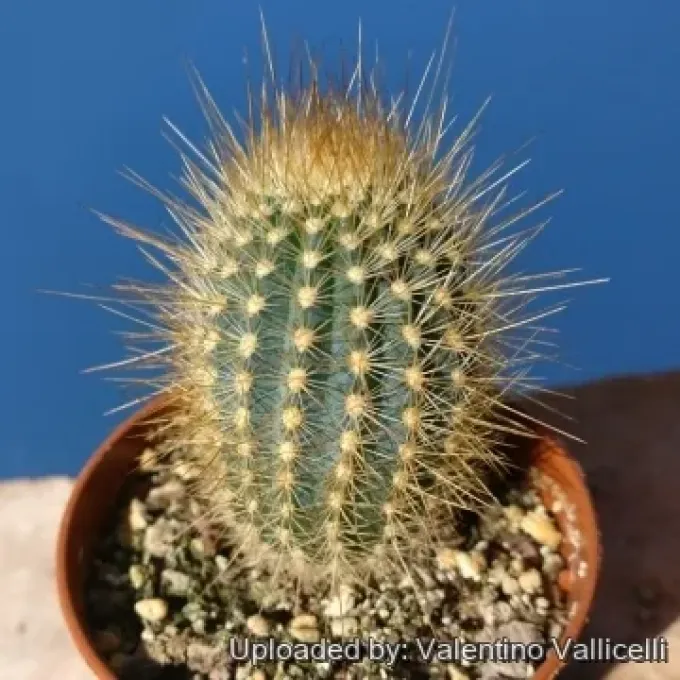
Description
Sowing dates
Micranthocereus estevesii is primarily propagated through seeds, which requires careful timing and controlled environmental conditions. Spring is the optimal season for sowing, as the increasing light levels provide the necessary energy for seed germination and seedling establishment.
The substrate for sowing should be porous and highly inorganic, typically composed of coarse sand and finely crushed volcanic rock. Seeds are scattered on the surface and should not be deeply buried, ensuring they remain in contact with the moist, yet well-drained medium.
A constant temperature range of 22 to 25 degrees Celsius is essential for successful germination. Maintaining stable humidity under a transparent cover is critical until the seedlings develop their first spines and show signs of independent growth.
Young seedlings grow quite slowly, making patience a requirement for the agronomist. They should remain in the germination container for at least a year before any attempt at repotting is made to avoid disturbing the fragile root system.
Consistent airflow around the seed trays is necessary to prevent the formation of surface molds and pathogens, which can rapidly destroy young, succulent seedlings that have not yet developed their defensive tissues.
Growing requirements
As a member of the Cactaceae family, Micranthocereus estevesii is native to specific, rocky arid regions of Brazil. Its morphology is perfectly adapted to withstand long periods of drought, reflecting its high evolutionary specialization to harsh environments.
This species requires full, direct sun exposure to maintain its compact growth form and promote the development of its characteristic spine structures. In greenhouses, supplemental full-spectrum lighting is often necessary to prevent etiolation during cloudy winter days.
Soil requirements are strict: the medium must have excellent drainage and low organic matter content to prevent water retention. A mix of pumice, perlite, and coarse sand provides the ideal structural environment for the deep root system of the plant.
The watering regime must follow the natural cycles of its native habitat, with generous hydration during the active growing season and a strict dry period during the winter rest phase. Temperatures during winter should be lowered to induce dormancy.
Fertilization should be handled with caution, using low-nitrogen, high-potassium formulas specifically designed for desert cacti. Excessive nitrogen can cause rapid, unhealthy growth, leading to structural weakness and increased susceptibility to pests.
Main diseases and pests
Root rot is the most significant threat to Micranthocereus estevesii, usually resulting from overwatering or poorly aerated soil. Once rot reaches the inner vascular system of the cactus, the plant becomes extremely difficult to save.
Mealybugs are the most common pests, often sheltering in the dense spine clusters where they are difficult to reach with standard contact sprays. Manual removal or systemic insecticides applied through the soil are effective strategies for management.
Spider mites can also become a problem if the ambient humidity remains too low for an extended period, especially in confined spaces with poor air circulation. Regular misting or monitoring the plant's surface helps in identifying early signs of infestation.
Pathogen prevention is primarily achieved through strict sanitation protocols for all potting tools and containers. Ensuring that the plant has adequate ventilation helps to minimize the accumulation of moisture on the epidermis, which acts as a gateway for bacterial infections.
- Ensuring complete desiccation of the substrate between watering cycles.
- Monitoring the base of the stem for discoloration or softening.
- Implementing regular quarantine procedures for all new plant acquisitions.