
Mongolian milkvetch
Astragalus membranaceus Bunge
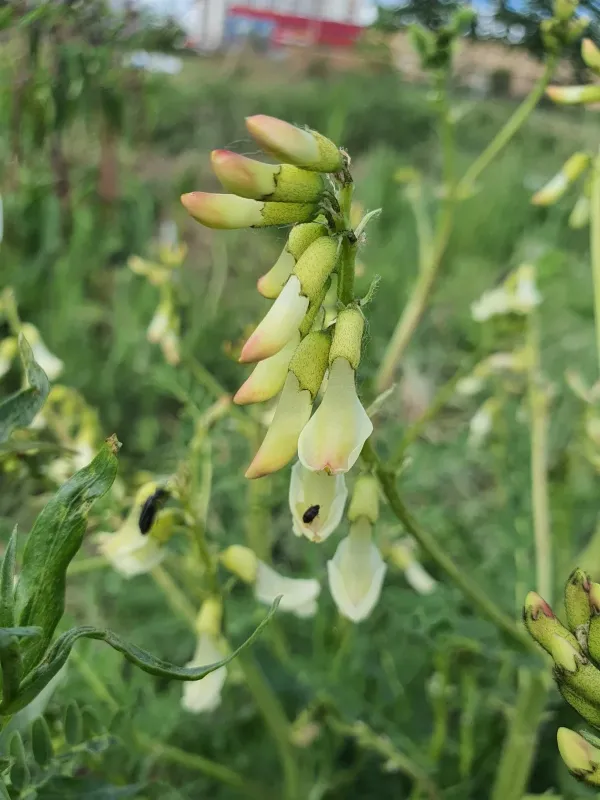
Description
Sowing dates
Astragalus membranaceus, commonly known as Mongolian milkvetch, is a perennial flowering plant in the Fabaceae family. It is widely cultivated for its roots, which are a cornerstone of traditional herbal medicine due to their high concentration of saponins, polysaccharides, and flavonoids.
The optimal time for sowing is early spring as soon as the soil warms up to at least 8-10 degrees Celsius. Fall planting is also effective, as the cold stratification process during winter significantly enhances seed germination rates in the following spring.
Seeds of this species have a hard, impermeable seed coat, which requires mechanical scarification to ensure uniform germination. Planting depth should be approximately 1.5 to 2 centimeters, with row spacing kept between 45 and 60 centimeters to facilitate mechanical weeding and aeration.
In the first year of growth, the plants develop slowly and are sensitive to weed competition. Therefore, intensive weed management during the early stages of establishment is vital for the survival and long-term health of the crop.
Target planting density is typically between 200,000 and 250,000 plants per hectare. This density provides an ideal balance, allowing individual plants sufficient space to develop robust root systems while maximizing total biomass yield per unit of land.
Growing requirements
Mongolian milkvetch requires full sun exposure to thrive and synthesize its active medicinal compounds. Shady conditions should be avoided, as they significantly inhibit plant growth and result in lower quality roots with reduced potency.
The ideal soil for this crop is light, deep, and well-drained, such as sandy loam or loose loam. The plant is extremely sensitive to waterlogging; poorly drained soil with high clay content often leads to root rot, which can destroy the entire plantation.
While the plant exhibits moderate drought resistance once established, consistent moisture is necessary during the active growing season. Irrigation should be applied strategically during dry spells to ensure steady development of the taproot.
Soil fertility management should focus on phosphorus and potassium, which are critical for root development. As a legume, it forms a symbiotic relationship with nitrogen-fixing bacteria, reducing the need for intensive synthetic nitrogen fertilizer application.
The plant is highly frost-tolerant and survives harsh winters well, provided the soil drainage is adequate. A long-lasting snow cover is beneficial, as it protects the crowns from severe temperature fluctuations.
Yield
The primary harvestable product of Astragalus membranaceus is the root, typically collected after 3 to 4 years of growth. Harvesting at this stage ensures the roots have reached peak medicinal maturity and biomass.
Under optimal management, dry root yield can range from 1.5 to 2.5 tons per hectare. Variations in yield are often attributed to soil quality, local precipitation patterns, and the specific variety or ecotype of the seeds used.
Post-harvest processing is essential for quality assurance. The roots must be thoroughly cleaned of soil, trimmed of fine fibrous lateral roots, and processed promptly to prevent microbial growth or degradation of volatile components.
Yield stability is heavily influenced by the quality of the initial seed stock. Selecting high-germination, disease-free seeds from established nurseries is a fundamental step in achieving consistent and professional production levels.
Regular monitoring of field conditions allows for early intervention in case of nutrient deficiencies, which helps in maintaining high growth rates throughout the multi-year production cycle of the crop.
Main diseases and pests
Fusarium wilt and various fungal root rots are the most significant threats to Astragalus plantations, particularly in fields with poor drainage. Implementing a long-term crop rotation cycle of at least 5-6 years is the primary defense against these soil-borne pathogens.
Nodule weevils and other foliage-feeding insects can cause damage during the seedling stage. Monitoring for these pests and implementing early-season biological control measures helps to prevent significant damage to young populations.
Powdery mildew can occur during periods of high humidity and poor ventilation. Keeping the crop canopy clear of dense weeds and ensuring proper row spacing are important cultural practices to reduce the incidence and spread of fungal diseases.
Small rodents can pose a threat by feeding on the roots during the winter months, especially under snow cover. Maintaining clean field borders and using deterrents can help mitigate the impact of rodent populations on the roots.
Prevention through healthy agronomic practices is superior to curative chemical applications. Maintaining soil health and using certified seeds are the most effective ways to ensure the longevity of the plant and the quality of the herbal product.
Harvesting
The harvest occurs in late autumn after the aerial parts have withered and gone dormant. At this time, the plant has effectively translocated its nutrient reserves down into the root system, which maximizes the concentration of active medicinal substances.
Mechanical harvesting is typically performed using root diggers or modified plows that lift the soil to a depth of 40-50 centimeters. Great care must be taken to minimize bruising or breaking the main taproot during the extraction process.
Once extracted, the roots are separated from the soil and debris. If the roots are particularly large, they may be sliced longitudinally to ensure they dry thoroughly and evenly, preventing mold growth within the center of the root.
Drying should be carried out in shaded, well-ventilated structures or specialized mechanical dryers at temperatures below 50 degrees Celsius. Excessive heat can degrade the chemical compounds, rendering the medicine less effective.
Final storage requires moisture-resistant packaging and cool, dark conditions. Maintaining these storage parameters is critical for preserving the shelf life and potency of the dried Mongolian milkvetch roots for commercial distribution.