
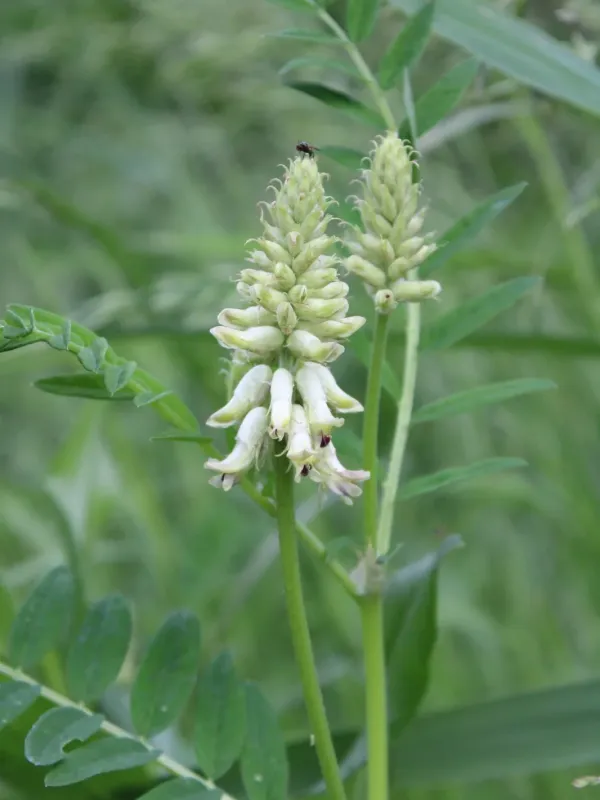
Marsh milkvetch
Astragalus uliginosus L.
Description
Sowing dates
Marsh milkvetch (Astragalus uliginosus) is a perennial herbaceous plant from the Fabaceae family. It is known for its ability to thrive in moist environments where other legumes might struggle to establish.
The sowing process is most effective during early spring when soil moisture levels are optimal. Ensuring a firm seedbed is crucial to facilitate proper moisture uptake, as the seeds benefit from pre-sowing scarification to break their hard coats.
Seed depth should be kept shallow, generally around 1.5 to 2 centimeters. This depth promotes faster emergence and helps the seedling access light and warmth while remaining protected from drying out.
Growth during the first year is primarily directed toward root development, which means the seedlings appear slow to grow above ground. During this establishment phase, weeding is vital to prevent competition from more aggressive weeds.
As the plant matures, it forms a robust root system capable of fixing nitrogen, which not only benefits the plant itself but also improves the fertility of the surrounding soil for future crops.
Growing requirements
As the name suggests, Astragalus uliginosus is highly adapted to wet and marshy habitats. It thrives in soils that remain moist for significant portions of the growing season, showing high tolerance to moisture-rich conditions.
The species is remarkably winter-hardy, capable of surviving harsh, cold climates. Its biological rhythm is perfectly synced with temperate and boreal regions, allowing it to withstand deep frost without significant plant loss.
Regarding soil preferences, it favors fertile loam or sandy loam with a neutral to slightly acidic pH. It performs best where there is a steady supply of moisture and sufficient organic matter in the soil profile.
While it is moisture-loving, it requires adequate aeration in the root zone during the active growing season. It is a versatile plant that can be integrated into pasture mixes to improve soil structure and forage quality.
Its natural range across northern Eurasia confirms its resilience to variable light conditions and its preference for areas with moderate to high water availability throughout the year.
Yield
Marsh milkvetch provides a consistent yield of green biomass, making it a valuable candidate for forage production. When harvested at the right time, it offers a high concentration of essential proteins and amino acids.
The crop is long-lived, often persisting in the field for many years under proper management. This longevity reduces the need for frequent reseeding, making it an economically attractive option for livestock producers.
Beyond its use as fodder, the plant serves as a late-season honey source for pollinators, supporting biodiversity in agricultural landscapes. Its role in nitrogen fixation significantly contributes to the sustainability of the forage crop rotation.
Managing the harvest timing is critical; cutting too frequently or at the wrong development stage can deplete the energy reserves stored in the roots, potentially reducing future biomass yields.
When utilized for silage or hay, it contributes to a nutritionally balanced diet for cattle, especially when mixed with compatible grass species that thrive in similar moist conditions.
Main diseases and pests
Common agricultural pests affecting the species include weevils, which may damage the root structures or floral parts, potentially impacting the seed yield if not managed properly.
Fungal diseases like powdery mildew and rust are the primary threats, especially in dense stands where air circulation is poor and humidity remains trapped within the canopy for extended periods.
Effective management strategies involve ensuring proper plant spacing and maintaining hygiene within the field to reduce the initial inoculum of pathogens.
Integrated pest management (IPM) practices, such as monitoring for insect activity and applying treatments only when necessary, help maintain the health and vigor of the milkvetch stands.
- Monitor fields during high humidity for signs of powdery mildew.
- Use certified, disease-free seed stocks for planting.
- Implement proper crop rotation to break the cycle of host-specific pests.