
Astragalus galegiformis
Astragalus galegiformis L.
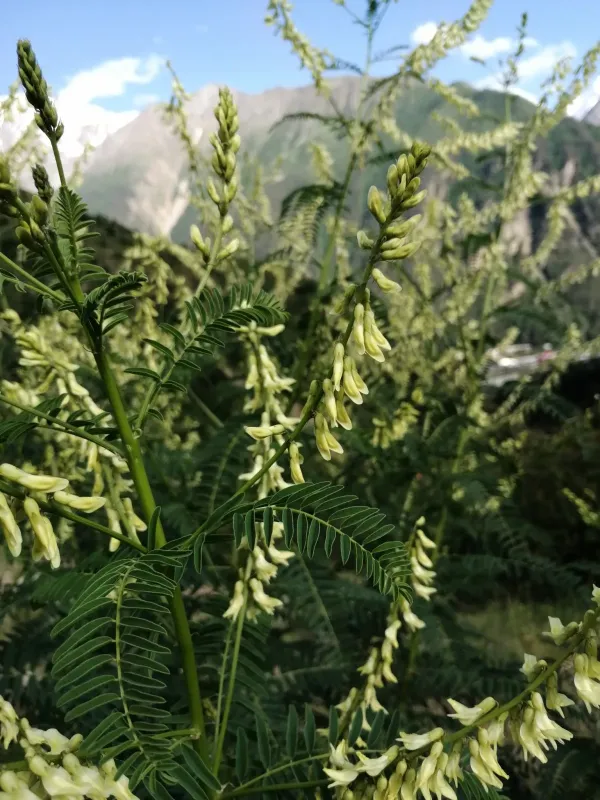
Description
Sowing dates
Astragalus galegiformis (Astragalus galegiformis L.) is a long-lived perennial legume known for its exceptional winter hardiness and persistence. Because its seeds possess a hard seed coat, scarification is essential to ensure uniform and rapid germination.
The ideal time for sowing is early spring as soon as soil conditions allow. Autumn planting is also possible, allowing the seeds to undergo natural stratification, which helps break dormancy and promotes early spring growth.
The recommended seeding rate ranges from 10 to 12 kg per hectare. Rows should be spaced 15–30 cm apart to ensure even plant distribution. A shallow planting depth of 2–3 cm is recommended to prevent excessive seedling stress.
During the first year, the crop focuses on establishing a robust root system, resulting in slow above-ground growth. Effective weed management during this period is critical, as young plants can be easily outcompeted.
In mixed stands, seeding rates must be carefully calculated based on the companion species. Ensuring proper seed-to-soil contact and optimal moisture levels is key to successfully establishing a productive perennial stand.
Growing requirements
This crop is highly adaptable, exhibiting excellent drought tolerance due to its deep taproot system. It performs well in varied climates, maintaining productivity even through harsh winters and long dry spells.
Fertile, well-drained soils are ideal for cultivation. The plant does not tolerate waterlogging or high water tables, which can inhibit root development and cause decay in the root system.
Astragalus prefers neutral to slightly alkaline soil conditions. If the soil is acidic, liming is necessary to improve the performance of nitrogen-fixing bacteria residing in the plant's root nodules.
As a light-loving plant, Astragalus requires full exposure to sunlight. Shaded areas should be avoided, as restricted sunlight leads to weakened stems and significantly lower biomass yields.
Regarding fertilization, the crop is responsive to phosphorus and potassium applications. Nitrogen is generally not required in large amounts, as the plant fulfills its needs through biological nitrogen fixation.
Yield
The green mass yield of Astragalus galegiformis can reach 300–450 centners per hectare under optimal conditions. Productivity remains high for 10–15 years, making it a reliable perennial asset.
Seed harvesting is challenging due to the asynchronous ripening of the pods. Many farmers employ chemical desiccation to ensure the crop ripens uniformly, facilitating easier mechanical harvesting.
The nutritional profile of the forage is excellent, being rich in crude protein and essential minerals. This makes it a preferred choice for hay, haylage, and fresh fodder production for livestock.
The crop's long-term presence on a site contributes to improved soil structure and fertility. By fixing atmospheric nitrogen, it reduces the need for synthetic fertilizers for subsequent crops in a rotation.
Astragalus demonstrates strong regrowth capacity after mowing or grazing. This versatility allows farmers to obtain multiple cuts during a single growing season, maximizing the total forage yield.
Main diseases and pests
Typical diseases affecting this crop include various leaf spots and rusts. High humidity and poor airflow within the canopy are the primary factors that contribute to the development of these fungal pathogens.
Pests such as weevils and aphids can be problematic, especially during hot and dry seasons. Weevils primarily target the developing seeds, which can lead to significant losses in seed production areas.
Integrated pest management strategies should focus on preventive measures. Maintaining proper row spacing and timely harvesting helps to reduce the accumulation of pathogens and insect populations on the field.
When chemical intervention is required, the use of selective and bee-safe pesticides is mandatory, as Astragalus is an important pollinator-friendly plant that attracts diverse insect life.
General crop vigor is the best defense against threats. Providing adequate nutrition and ensuring the soil is not overly compacted helps the plants maintain a high level of natural immunity against common diseases.