
Medinilla
Medinilla miniata x Medinilla magnifica
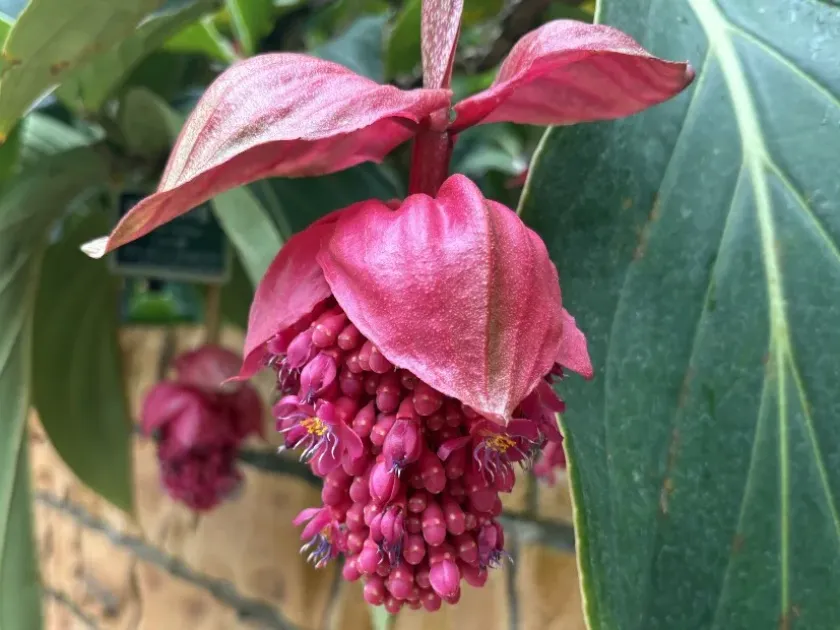
Description
Growing requirements
Medinilla is an exquisite genus of the Melastomataceae family, native to the tropical rainforests of the Philippines and Southeast Asia. As an epiphyte, it is highly prized in horticulture for its spectacular, pendulous racemes of pink flowers and large, glossy, veined leaves.
The plant thrives in temperatures between 20–25 degrees Celsius. During the winter months, it is essential to lower the temperature to 16–18 degrees to encourage a resting period, which is crucial for future floral development. Cold drafts must be strictly avoided.
High air humidity is non-negotiable for Medinilla. It requires a humidity level of at least 70–80 percent. Frequent misting with soft water or placing the plant on a tray filled with wet pebbles is highly recommended to prevent leaf desiccation and bud drop.
A well-aerated, acidic, and loose growing medium is required. A mix consisting of peat moss, pine bark, and perlite provides the necessary structure for healthy root development. Ensuring the container has excellent drainage holes is vital to prevent water stagnation.
Light requirements involve bright but indirect sunlight. Direct noon sun can quickly scorch the foliage, leading to unsightly brown patches. Positioning the plant near windows that provide filtered light is optimal for maintaining its structural and aesthetic health.
Main diseases and pests
Spider mites are the most common pests associated with Medinilla, especially in dry environments. They cause yellowing of the leaves and fine webbing. Increasing humidity and using appropriate acaricides are the most effective methods for control.
Scale insects often infest the stems and undersides of leaves, appearing as small brownish bumps. They sap the energy from the plant, necessitating manual removal or the application of systemic insecticides to ensure complete eradication.
Grey mold (Botrytis) is a significant fungal threat, triggered by high moisture levels coupled with stagnant air. It manifests as a fuzzy, greyish growth on flowers and leaves. Improvement of air circulation and immediate removal of affected plant parts are required.
Mealybugs can cluster in leaf axils, creating white, cottony masses. These pests are resilient, requiring careful inspection and treatment with horticultural oils or specific insecticidal soaps to prevent damage to the plant's health.
Root rot is typically caused by overwatering or using a heavy, non-porous soil mix. Once rot sets in, the plant struggles to recover, making prevention through controlled watering cycles and high-quality, free-draining substrate the best course of action.