
Medinilla miniata
Medinilla miniata Merr.
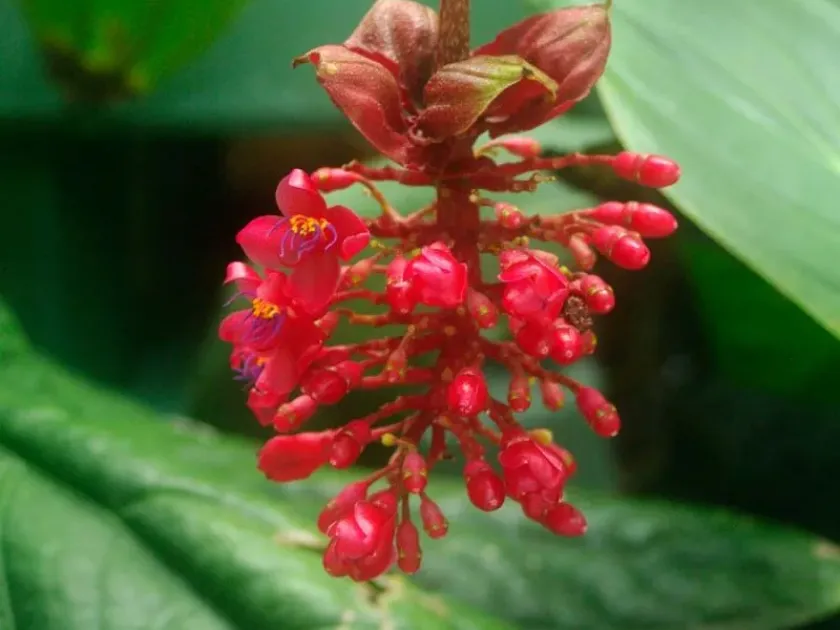
Description
Growing requirements
Medinilla miniata is a striking flowering shrub belonging to the Melastomataceae family. This species originates from the tropical rainforests of Southeast Asia, specifically thriving in the humid environments of the Philippines as an epiphyte.
The plant is noted for its thick, leathery, lanceolate leaves and pendulous inflorescences. The flowers are typically orange-red or pinkish, enclosed by prominent, colorful bracts that give the plant its characteristic decorative appearance.
Cultivation requires high ambient humidity, ideally above 75%, to mimic its natural forest habitat. The optimal temperature range for growth is consistently between 20°C and 26°C, as the plant does not tolerate significant drops below 15°C.
The soil must be exceptionally well-draining, similar to an orchid mix. A combination of orchid bark, peat moss, and perlite provides the necessary aeration for the sensitive root system, preventing compaction and rot.
Indirect, bright light is essential for healthy development. While it requires significant light intensity to bloom, direct midday sun should be avoided to prevent foliar damage and drying of the leaf margins.
Main diseases and pests
Root rot, triggered by overwatering and poor drainage, is the primary threat to the health of Medinilla miniata. Once the root system is compromised, the plant struggles to recover, making water management critical.
Pests such as mealybugs and scale insects are common in glasshouse conditions. They tend to cluster in leaf axils, and their feeding activity can stunt growth and invite secondary fungal infections.
Spider mites can proliferate if the environment becomes too dry. Frequent misting and maintaining proper hygiene within the cultivation area are effective preventive measures against these infestations.
Fungal leaf spot diseases may occur if moisture persists on the foliage for too long without adequate ventilation. Ensuring consistent airflow helps to keep the leaves dry and healthy.
Botrytis, or gray mold, can affect the delicate floral bracts during cooler, damp periods. Proper spacing between plants is recommended to minimize the spread of spores and improve overall crop health.