
Medinilla magnifica
Medinilla magnifica Lindl.
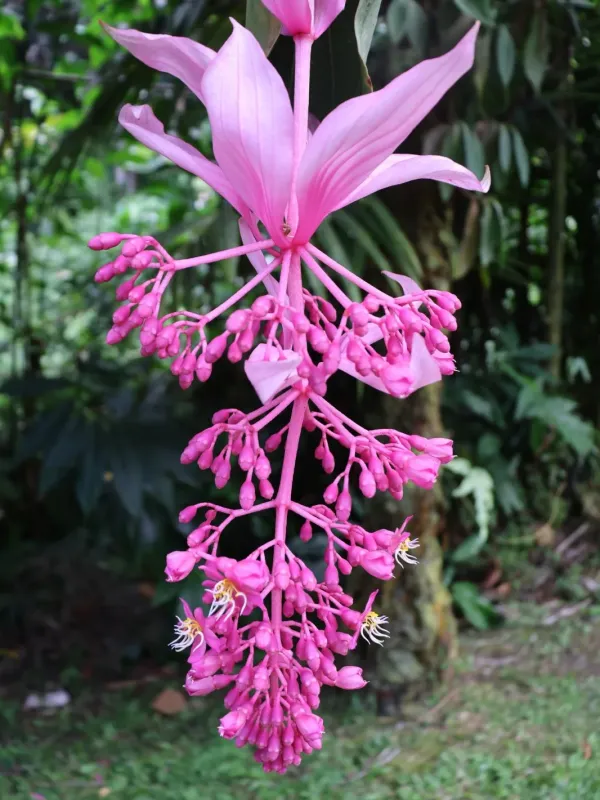
Description
Growing requirements
Medinilla magnifica is a spectacular species belonging to the Melastomataceae family. Originating from the tropical rainforests of the Philippines, this plant functions as an epiphyte, deriving moisture and nutrients from its environment in high-humidity habitats.
The cultivation of this crop requires a controlled environment with temperatures typically ranging between 20°C and 25°C. It is highly sensitive to cold drafts, and maintaining a consistent thermal environment is crucial for both vegetative growth and the development of its large inflorescences.
High relative humidity, ideally above 70%, is essential for the healthy development of Medinilla magnifica. Insufficient moisture often leads to the tips of the leaves drying out and may inhibit the formation of the plant's characteristic rose-pink flower bracts.
The substrate must be well-draining and aerated to mimic the forest floor or tree bark environments. A mixture of orchid bark, peat moss, and perlite is often recommended to ensure that the root system has access to oxygen and is protected from waterlogging.
Light management is a key aspect of its agro-technology. While it thrives in bright conditions, direct, intense sunlight can cause significant leaf burn. Filtered or indirect light is ideal, promoting dense foliage and prolonging the blooming period of the plant.
Main diseases and pests
Mealybugs are among the most persistent pests for this species. They tend to cluster in the joints of the branches and underneath the foliage, and their presence can be identified by a white, cottony substance that stunts the plant's growth.
Scale insects present a significant threat by attaching themselves to the stems and leaves, feeding on sap. Regular monitoring is recommended to catch infestations early, as scale insects are protected by a hard shell that resists many contact insecticides.
Root rot is the most common disease associated with improper irrigation practices. Overwatering, particularly in a container with poor drainage, leads to anaerobic conditions that quickly degrade the root system and can kill the plant within a few weeks.
Botrytis, or grey mold, may affect the delicate, drooping inflorescences if air circulation is stagnant. Ensuring adequate ventilation and avoiding overhead watering during the flowering phase are effective strategies to prevent fungal colonization.
Spider mites can become a problem in indoor settings during the winter when heating systems reduce the ambient humidity. Using miticides or increasing moisture levels around the plant are standard practices to mitigate the risk of mite outbreaks.