
Manettia ignita
Manettia ignita
Description
Sowing dates
Propagation of Manettia ignita is primarily achieved through stem cuttings, which are harvested during the active growing season to ensure high success rates.
Cuttings should be placed in a lightweight, well-draining rooting medium, such as a mix of peat moss and perlite, to provide optimal aeration for roots.
Maintaining high humidity and a consistent temperature range of 22–25 degrees Celsius is critical for the development of healthy, vigorous root systems.
Once the root system is well-established, young plants can be transplanted into larger containers with nutrient-rich soil to support rapid vertical growth.
Proper timing for propagation ensures that the plant has enough time to develop a strong structure before entering its dormant period or winter season.
Growing requirements
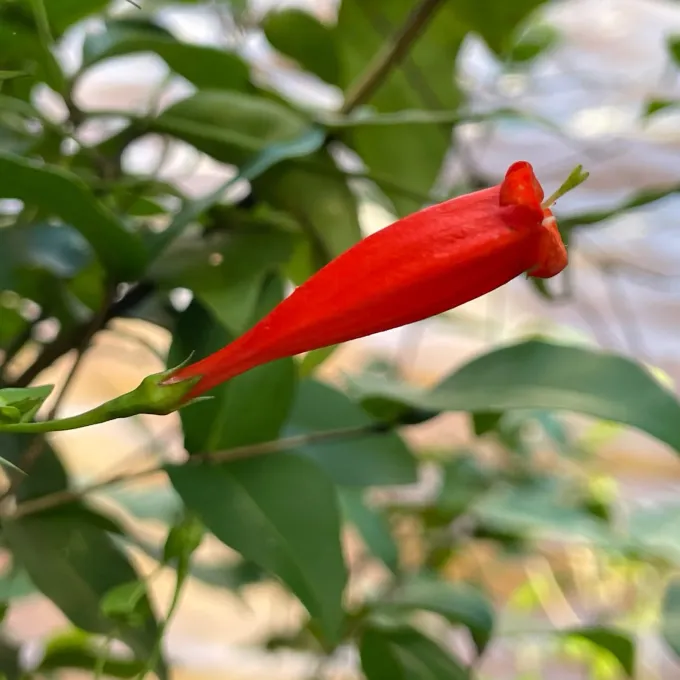
Manettia ignita is a member of the Rubiaceae family, known for its stunning fire-red flowers and climbing habit native to the rainforests of South America.
This species requires a bright, diffused light environment; while it loves light, direct afternoon sun can scorch the delicate foliage of the vine.
The soil should be kept consistently moist but never waterlogged, as the plant is highly sensitive to root rot caused by poor drainage in containers.
Temperature management is key; the plant thrives in tropical conditions and should be protected from any drafts or temperatures dropping below 15 degrees Celsius.
Regular fertilization with a balanced, water-soluble fertilizer during the peak growing season encourages continuous blooming and healthy vegetative growth.
Main diseases and pests
Spider mites are the most common pest, often appearing in environments where air circulation is poor and humidity levels are significantly low.
Scale insects can attach themselves to the stems and leaf undersides, drawing essential nutrients away from the plant and causing stunted growth.
Fungal infections, often manifested as leaf spots or stem decay, are direct indicators of excessive watering and lack of proper air movement around the plant.
Early detection of these threats is essential; routine washing of the foliage can help prevent the buildup of dust and the early establishment of pests.
If chemical intervention becomes necessary, systemic insecticides or fungicides should be applied carefully according to the manufacturer's specific guidelines.