
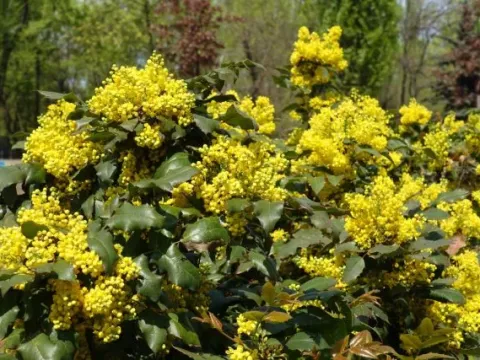
Mahonia
Mahonia
Mahonia seeds require a period of stratification to germinate effectively. The most successful approach is autumn sowing directly into the soil, allowing the seeds to undergo natural winter chilling for at least three months.
What the section contains


Mahonia
If sowing in the spring, seeds must be artificially stratified in a refrigerator for 90 days. Place them in a moist medium at a temperature between 0 and 5 degrees Celsius to break seed dormancy.
When propagating through cuttings, use semi-hardwood shoots taken in mid-summer. Ensure the cuttings are placed in a shaded frame with high humidity to encourage root development before the onset of winter.
Young plants grown from seeds should be kept in a nursery or protected container for the first two years. This allows them to develop a robust root system before transplanting to their final location in the landscape.
Proper spacing is crucial when planting multiple shrubs, typically requiring at least one meter between plants to ensure adequate airflow and room for the shrub to reach its full size over time.
Mahonia is a member of the Berberidaceae family, consisting of evergreen shrubs known for their spiny, holly-like leaves. The most popular species for cultivation is Mahonia aquifolium, native to western North America.
These plants thrive in fertile, well-draining soils with a slightly acidic to neutral pH. It is essential to avoid sites prone to waterlogging, as the roots are susceptible to decay if kept in constantly wet soil.
The ideal location for Mahonia is in partial shade. While they can tolerate sun, intense summer heat can scorch the foliage, while full shade may result in poor flowering and reduced berry production.
In regions with harsh winters, Mahonia benefits from wind protection. Planting them near walls or larger, wind-breaking trees can prevent the winter drying of leaves, which is a common issue for evergreens.
Maintenance involves seasonal pruning to keep the shape, annual mulching to retain moisture, and the application of balanced organic fertilizers in early spring to support the new growth flush.
Mahonia produces clusters of dark blue, waxy berries that ripen in late summer. While not typically grown as a mass-market commercial crop, the fruits are highly valued in home gardening and specialty food production.
The berries are tart and rich in vitamin C and various antioxidants. They are widely used in culinary applications, including the making of jams, jellies, wine, and as a natural food coloring for sauces and desserts.
Harvesting should be timed carefully once the berries achieve a deep blue-black color. Since birds often feed on the fruit, it is recommended to monitor the shrubs closely as the ripening period approaches.
The economic value of Mahonia also extends to its bark and roots, which contain berberine. This compound is of significant interest in the pharmaceutical industry for its anti-inflammatory and antiseptic properties.
With consistent care and proper watering during fruit development, a mature shrub can yield a substantial amount of berries annually, providing a consistent source of produce for personal consumption.
Powdery mildew is the most common fungal issue affecting Mahonia, appearing as a white powdery coating on leaves. It is best managed by improving air circulation and applying targeted sulfur-based fungicides if necessary.
Rust can occur, showing as reddish-brown spots on the foliage. To prevent its spread, infected leaves should be promptly removed and destroyed, and the garden area should be kept clear of debris.
Insect pests, including aphids and scale insects, may occasionally infest the plant. Early detection is key; soapy water or organic insecticidal soaps are usually sufficient for controlling small populations.
To keep the shrub healthy and resistant, avoid over-fertilizing with nitrogen, which creates succulent growth susceptible to pests. A balanced, steady approach to nutrition supports the plant's natural defenses.
Regular sanitation of the garden space around the shrub is a vital preventive measure. By keeping the ground clean and maintaining proper spacing between plants, the likelihood of pathogen outbreak is significantly reduced.