
Lysionotus petelotii
Lysionotus petelotii
Description
Growing requirements
Lysionotus petelotii is a remarkable perennial plant belonging to the Gesneriaceae family. Originating from the mountainous regions of Vietnam and surrounding Southeast Asian areas, it typically grows as an epiphyte or lithophyte, clinging to surfaces in humid tropical environments.
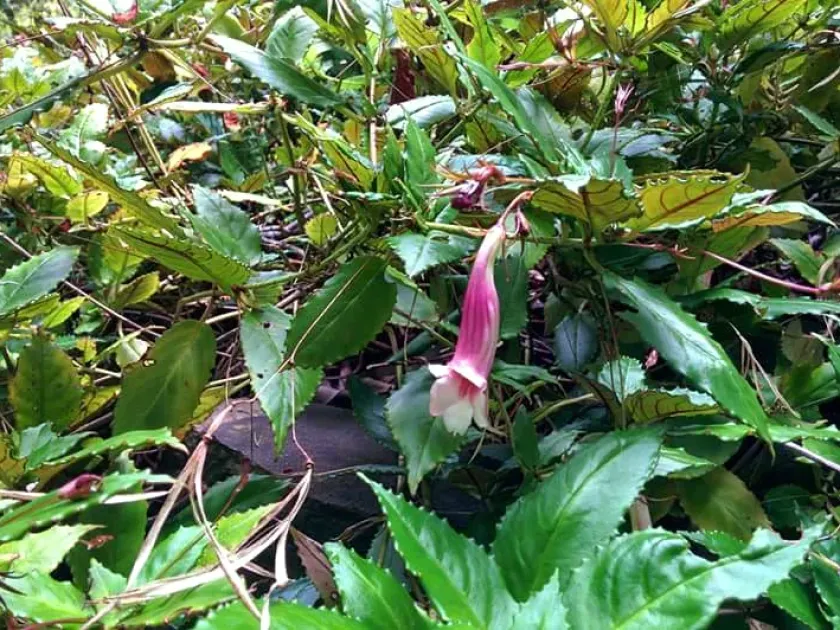
The botanical structure of the plant consists of semi-woody stems and firm, leathery leaves that are arranged in a specific pattern along the stalks. Its flowers are characteristically tubular, reflecting the evolutionary adaptations of Gesneriads to attract specific pollinators in forest habitats.
To successfully cultivate this species, growers must replicate high-humidity mountain forest conditions. Providing bright, indirect light is crucial, as direct sunlight can easily damage the delicate foliage and inhibit the development of the plant's unique blooming cycle.
The planting medium must be highly porous and well-draining, similar to natural epiphyte substrates. A mixture containing organic bark, perlite, and sphagnum moss is recommended to maintain the necessary oxygen levels for the roots while holding sufficient moisture.
Commercially, Lysionotus petelotii is mainly valued in the botanical garden and collector market. It serves as a decorative specimen for terrariums or specialized greenhouses, where environmental parameters such as temperature and humidity can be precisely managed for optimal growth.
Main diseases and pests
The most common agricultural threats to Lysionotus petelotii are pathogenic fungi caused by poor air circulation and excessive substrate moisture. Maintaining proper airflow around the canopy and ensuring the soil is never waterlogged is essential for long-term health.
Pests like spider mites and mealybugs can pose significant risks, especially in indoor environments where humidity may fluctuate. Early detection via leaf inspection and the application of appropriate biological controls are the primary methods for managing these common plant pests.