
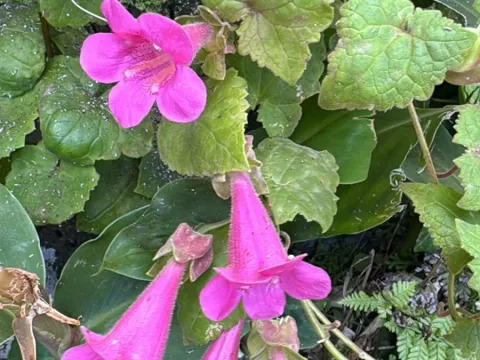
Lophospermum
Lophospermum x Maurandya
Sowing Lophospermum (commonly known as Maurandya) seeds in temperate climates is best performed in late February or March. The seeds are extremely small, requiring surface sowing on moist, fine-textured seed-starting mix without covering them, as they need light to germinate efficiently.
What the section contains

Lophospermum
To ensure successful germination, maintain a consistent temperature between 20 and 22 degrees Celsius. Covering the seed tray with a clear lid or plastic film creates the necessary humidity, with seedlings typically emerging within two to three weeks under optimal conditions.
Once the first pair of true leaves appears, seedlings should be pricked out into individual pots. It is crucial to handle the seedlings with care, as their roots are delicate and sensitive to disturbance during the early development stages.
Transplanting into the permanent location, whether in the garden or containers, should only occur after all risks of frost have passed. Providing a gradual hardening-off process helps the plants adapt to outdoor environmental conditions, ensuring a robust start to the growing season.
Lophospermum belongs to the Plantaginaceae family and originates from the mountainous regions of Mexico and the Southwestern United States. While it functions as a perennial in its native habitat, it is widely grown as a fast-growing annual in cooler regions for its ornamental value.
This crop thrives in well-drained, fertile, and loose soil with a neutral pH. Proper soil structure is essential for the healthy development of its extensive root system, preventing waterlogging that could lead to physiological stress or root rot.
As a light-loving plant, Lophospermum requires at least six to eight hours of direct sunlight daily to produce abundant flowers. While it appreciates high light levels, some protection from intense afternoon sun in arid climates can prevent foliage scorch and dehydration.
Regular fertilization with a balanced, water-soluble fertilizer is necessary throughout the active growth phase. Applying nutrients every two weeks supports the rapid elongation of its climbing stems and continuous flower production from early summer until the first frosts.
Consistent soil moisture is vital for this vine, especially when grown in containers where the substrate dries out quickly. Watering should be deep but infrequent enough to allow the surface to dry slightly, encouraging the roots to search for moisture and preventing suffocating conditions.
Vertical support is an absolute necessity for Lophospermum. The plant uses its sensitive leaf petioles to coil around supports, meaning that trellises, netting, or wire structures must be provided to accommodate its vigorous climbing habit and weight during the peak of flowering.
The most common pests affecting Lophospermum are spider mites and aphids, which frequently appear during hot, dry weather conditions. Regular inspection of the undersides of the leaves is critical for early detection and mitigation of these pests before they reach damaging levels.
Fungal issues, such as powdery mildew, may develop if the plant is kept in an area with poor airflow or high humidity. Maintaining proper spacing between vines and avoiding overhead watering are effective preventive measures against these common foliar diseases.
Root rot represents a severe threat usually caused by overwatering or poorly draining soil. To address this, ensure that containers have sufficient drainage holes and adjust the watering frequency to match the plant's actual uptake, which varies depending on sunlight and temperature.
In greenhouse or indoor environments, whiteflies can become a nuisance. Integrated pest management, including the use of sticky traps and biological control agents, is often more effective and sustainable than relying solely on broad-spectrum chemical insecticides.
- Ensure adequate ventilation in dense plantings.
- Remove any decaying foliage promptly to reduce fungal risks.
- Use sterile substrates to prevent soil-borne pathogens.
- Apply preventative treatments only when environmental factors favor disease.