
Limnophila hippuridoides
Limnophila hippuridoides
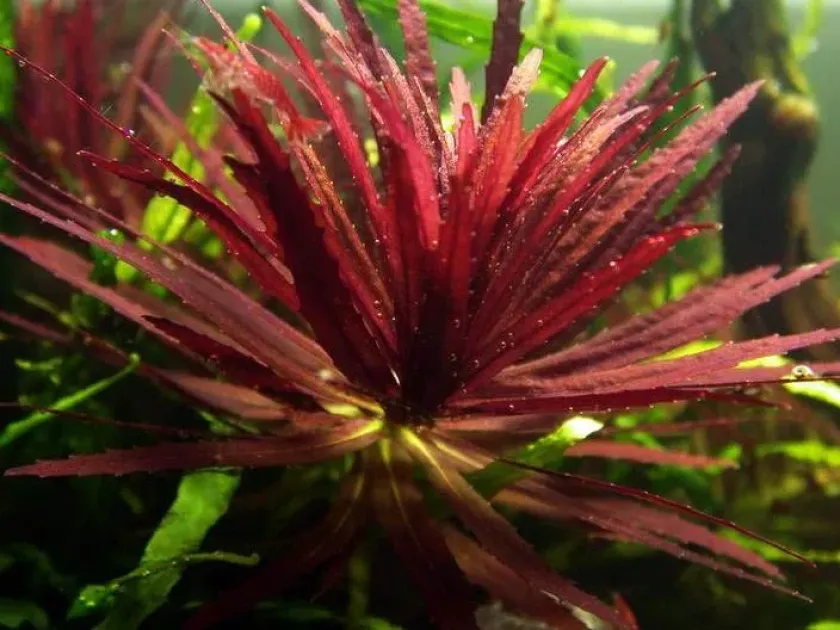
Description
Growing requirements
Limnophila hippuridoides is an ornamental aquatic plant species belonging to the Plantaginaceae family. In a professional agricultural and botanical context, it is cultivated primarily as a high-value aquatic crop for the professional aquascaping and greenhouse plant trade.
The species originates from the tropical regions of Southeast Asia. Its distinct botanical feature is the whorled leaf arrangement on a sturdy stem, which exhibits vibrant reddish-purple coloration under high-intensity light conditions, a trait highly valued in commercial aquatic horticulture.
Optimal growth requires a stable water temperature between 22°C and 28°C. It demands high levels of light intensity to prevent etiolation and maintain its characteristic pigmentation. Additionally, the injection of CO2 and a strictly regulated fertilizer regimen involving both macro- and micronutrients are essential for biomass production.
The cultivation substrate should be nutrient-rich and porous to support robust root system development. A pH range of 6.0 to 7.5 is ideal for nutrient uptake. In commercial greenhouses, plants are often grown in hydroponic systems with nutrient-rich water columns designed for accelerated growth cycles.
Commercial propagation is achieved through vegetative methods by harvesting lateral shoots or stem cuttings. These cuttings are replanted in dedicated growth tanks where they establish root systems rapidly, allowing for the efficient, large-scale production of high-quality plant material ready for market distribution.
Main diseases and pests
The most significant threat in large-scale cultivation is the rapid proliferation of filamentous and epiphytic algae, which outcompete the crop for essential nutrients and block light, thereby degrading product quality.
Micronutrient imbalances, particularly deficiencies in iron and magnesium, lead to chlorosis and the loss of the plant's aesthetic purple coloration, which significantly reduces its market value.
Bacterial soft rot, often triggered by excessive organic matter accumulation and poor water circulation, can devastate plantations by causing the decay of the stem base and root system.
While insect pests are rare in fully submerged cultivation, greenhouse-grown plants managed in submersed or emersed conditions can be vulnerable to infestations by aphids or spider mites, necessitating cautious chemical or biological control.
Management strategies involve rigorous water quality monitoring and maintaining strict hygiene protocols within the facility to prevent the introduction and spread of pathogens between production batches.