
Limnophila aquatica
Limnophila aquatica
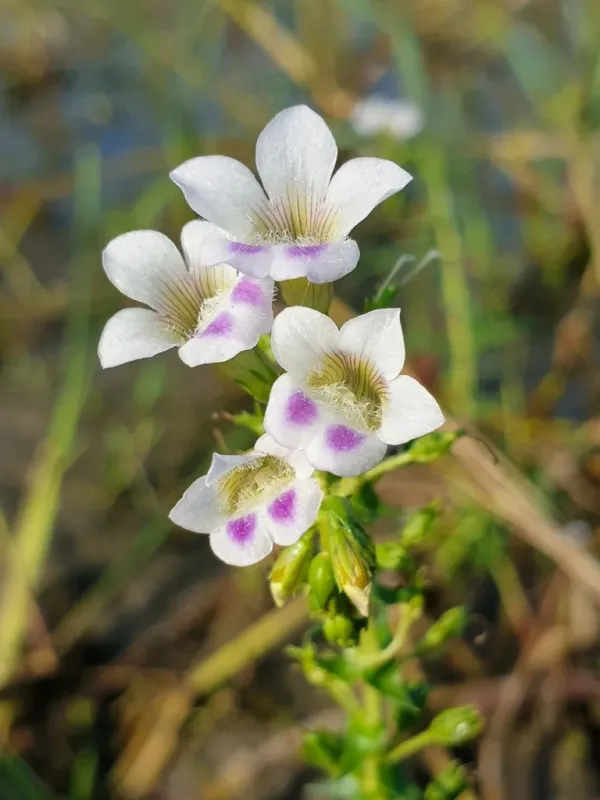
Description
Growing requirements
Limnophila aquatica belongs to the Plantaginaceae family. It is a striking aquatic perennial recognized for its delicate, finely divided, whorled leaves that create a lush, feathery appearance in any aquatic environment.
The species is native to tropical Southeast Asia, specifically found in India and Sri Lanka. In its natural habitat, it thrives in slow-moving or stagnant waters, including marshes and irrigation ditches, often rooting in nutrient-rich silt.
Optimal growth requires a temperature range of 22–28°C (72–82°F). High-intensity lighting is crucial for this plant; without sufficient light, the stem will stretch excessively, and the lower leaves will shed rapidly.
The substrate should be rich in micronutrients and iron. For vigorous growth, CO2 injection is highly recommended, as it promotes robust health and allows the plant to develop its characteristic deep green or reddish coloration.
This culture requires soft to moderately hard water with a slightly acidic to neutral pH. Proper water circulation and regular maintenance of chemical parameters ensure that the plant remains healthy and resistant to physiological disorders.
Main diseases and pests
Algae proliferation is the primary threat to this species. Because of its complex leaf structure, algae can easily attach to the foliage, effectively blocking light and causing the plant to starve and decay.
Nutrient deficiencies, particularly iron or nitrogen, lead to chlorosis. This manifests as yellowing of the foliage and brittle stems, which can quickly lead to the death of the plant if not addressed through targeted fertilization.
Harvesting
Cultivation is primarily achieved through stem cuttings. To propagate, take a healthy cutting of at least 10–15 cm, remove the lower leaves, and plant the stem directly into the nutrient-rich substrate using appropriate tools.
Regular pruning is essential to maintain the structural integrity and aesthetic shape of the plant. Pruning encourages lateral branching, leading to a denser and more attractive clump of the species over time.