
Leuenbergeria quisqueyana
Leuenbergeria quisqueyana
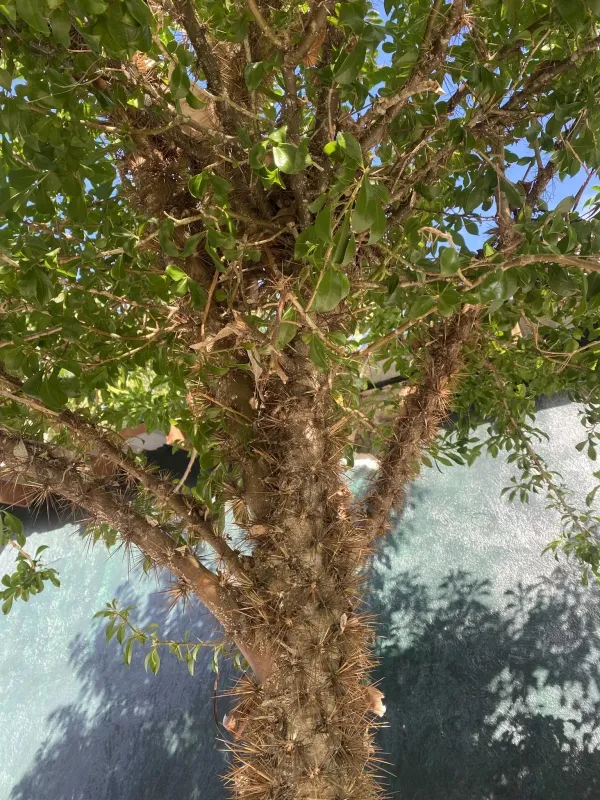
Description
Growing requirements
Leuenbergeria quisqueyana is a unique member of the Cactaceae family. Unlike many other cacti, this species retains leafy foliage on its younger stems, reflecting its ancient evolutionary lineage within the family.
The species is endemic to the Dominican Republic. It thrives in dry forest ecosystems, often establishing itself in rocky, limestone-rich soils that offer minimal nutrient availability but excellent physical drainage.
Cultivation requires conditions that mimic its native tropical dry environment. High light intensity is crucial, as shaded conditions lead to etiolation and a loss of the plant's characteristic structural integrity.
The soil medium must be highly porous. A mixture consisting primarily of mineral components, such as pumice, coarse sand, and a small amount of organic material, is recommended to support deep root development without moisture retention.
While primarily cultivated in botanical collections, the plant serves as a significant subject for research on plant evolution and xerophytic adaptation, requiring specialized care to maintain its health outside of its natural habitat.
Main diseases and pests
The most significant threat to Leuenbergeria quisqueyana is the susceptibility to root rot, which typically occurs if the plant is grown in dense soil or exposed to excessive moisture during dormant periods.
Common succulent pests, including mealybugs and spider mites, often target the leafy parts of the plant, potentially causing severe damage to the photosynthetic surfaces if not monitored closely.
Environmental stress caused by rapid changes in temperature or humidity can weaken the plant's natural defenses, making it more prone to secondary fungal infections.
Maintaining a clean growing environment and ensuring proper air circulation are fundamental practices to prevent the proliferation of pathogens that threaten this rare species.
Conservation efforts remain a top priority, as the species is highly vulnerable to habitat loss, requiring careful management of existing specimens to ensure the longevity of the population.