
Lepismium lumbricoides
Lepismium lumbricoides
Description
Growing requirements
Lepismium lumbricoides is a fascinating epiphytic cactus belonging to the Cactaceae family. It is native to the tropical and subtropical forests of South America, naturally thriving in countries such as Brazil, Argentina, and Paraguay.
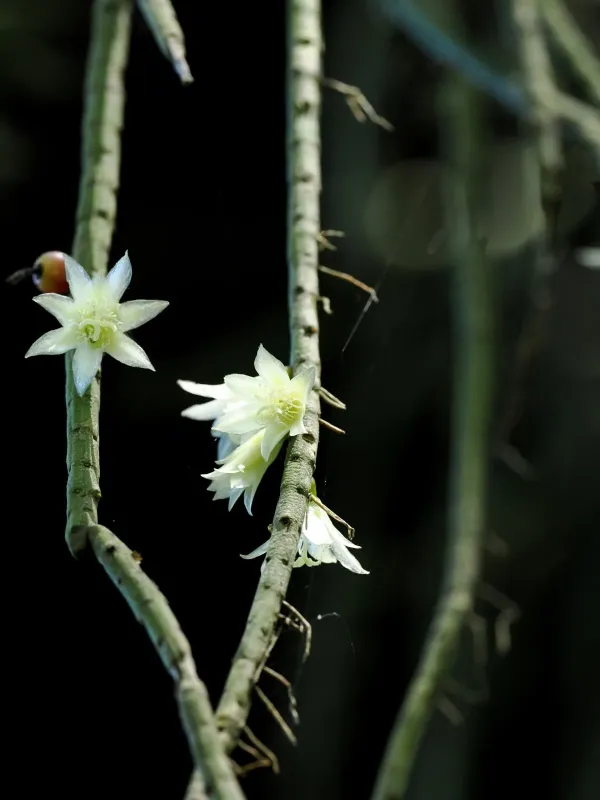
Botanically, this plant is recognized by its slender, cylindrical stems that resemble worms, hence its scientific name. These stems are adapted to hang from tree branches, acting as reservoirs for moisture in the humid forest canopy environment.
For successful cultivation, the plant requires bright, filtered light. It is essential to protect it from harsh, direct sunlight, which can quickly dehydrate the succulent stems and cause unsightly scorching damage to the epidermis.
The substrate must be highly porous and well-draining, mimicking the organic leaf litter found in its native habitat. A mixture of peat, perlite, and coarse bark is ideal for maintaining the necessary root aeration while providing sufficient moisture.
Climate control is crucial, with temperatures best kept between 18 and 24 degrees Celsius. The plant benefits significantly from high humidity levels, making it an excellent candidate for humid bathrooms or greenhouses where air moisture is consistent.
Main diseases and pests
The primary threats to Lepismium lumbricoides are fungal infections, particularly stem rot, which is almost always a result of overwatering. Ensuring the plant is not left in water-logged soil is the best defense against pathogens.
Pests such as mealybugs and spider mites are common enemies of this species. Mealybugs hide within the areoles, while spider mites thrive in low-humidity conditions, necessitating regular misting and careful inspection of the stem surfaces.