
Lecythis pisonis
Lecythis pisonis
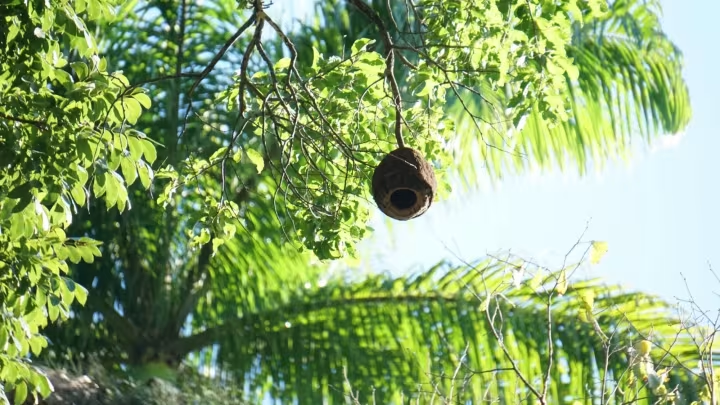
Description
Sowing dates
Lecythis pisonis, a member of the Lecythidaceae family, is propagated primarily through seeds. In its native rainforest habitat, the tree naturally reproduces by dropping mature seed pods that open on the forest floor, allowing seedlings to emerge in nutrient-rich soil.
For cultivation, it is critical to sow the seeds immediately after harvest, as they are recalcitrant and lose viability quickly if allowed to desiccate. The ideal germination environment requires high ambient humidity and stable temperatures ranging between 25 and 30 degrees Celsius.
Young seedlings are sensitive to intense light and require partial shade during the first few years of growth. Once the saplings reach a height of 40 to 60 centimeters, they can be transplanted to their permanent site, provided the root ball remains undisturbed.
Planting schedules in tropical zones are aligned with the onset of the wet season, which provides the necessary moisture for root establishment. Growers should be aware that this species has a slow growth rate, requiring patience before the trees reach maturity.
Planting density should be carefully managed, with a spacing of at least 10 to 12 meters between trees. This distance is necessary to accommodate the large, spreading canopy of the mature tree and to ensure adequate sunlight penetration for fruit production.
Growing requirements
Lecythis pisonis is a strictly tropical species that cannot survive temperatures below freezing. It thrives in equatorial environments where consistent heat and moisture are available throughout the year, with minimal seasonal variance.
The tree prefers deep, fertile, and well-drained soils. Sites with heavy clay or poor drainage are unsuitable, as they lead to root rot. Well-draining hill slopes are considered optimal locations for establishing sustainable plantations of this species.
High relative humidity is essential for the healthy physiological development of the tree. An annual rainfall of over 1500 mm is typically required, with consistent moisture levels being more beneficial than periodic heavy downpours followed by drought.
While seedlings prefer shade, mature trees are sun-loving and require full exposure to direct sunlight to optimize their metabolic processes. Adequate light levels are directly correlated with the quantity and quality of the nut yield.
Regular fertilization with organic matter is recommended, particularly during the early stages of development. Maintaining soil fertility helps the tree build a robust trunk structure and supports the complex energy requirements of nut production.
Yield
The primary economic product of Lecythis pisonis is its seeds, often called "sapucaia nuts" or "paradise nuts." These seeds are highly prized for their rich, buttery flavor and high content of beneficial fatty acids and proteins, making them a premium food product.
The nuts are consumed in various ways, including raw, roasted, or as key ingredients in gourmet confectionery. In local markets within their native range, these seeds represent a significant nutritional resource for rural populations.
Beyond the edible seeds, the wood of Lecythis pisonis is exceptionally dense, durable, and resistant to decay. This makes it a high-quality timber for demanding construction projects and maritime applications where strength is paramount.
Pharmacological research is ongoing regarding the bioactive compounds found in the tree's bark and leaves. These parts have been used in traditional medicine, and modern science is exploring their antioxidant and therapeutic potential.
The woody, pot-shaped fruit shells are frequently utilized in handicrafts and artisanal applications. Their unique structure and durability make them popular items for decorative purposes and traditional craft development.
Main diseases and pests
Fungal diseases are the most common threat to Lecythis pisonis plantations, especially in regions with persistently high humidity. These pathogens can cause significant leaf spot and shoot dieback, requiring rigorous monitoring and the use of preventative fungicides.
Wood-boring insects present a major challenge, as they can tunnel into the trunk and weaken the structural integrity of the tree. Routine visual inspections are necessary to detect early signs of infestation and prevent catastrophic loss of timber.
Mammalian pests, such as monkeys and various rodents, are known to harvest the nuts directly from the tree as they mature. This creates significant post-harvest losses, often necessitating physical barriers to protect the fruit until it is ready for collection.
Soil-borne pathogens can trigger root decay if the drainage systems in the plantation are poorly maintained. Ensuring proper aeration and avoiding compacted soil layers are critical steps in preventing the spread of soil-related ailments.
Invasive lianas and epiphytic plants can compete with young trees for light and nutrients. Regular plantation maintenance, including manual clearing around the base of the trees, is vital for the survival and health of the young specimens.