
Laguncularia
Laguncularia
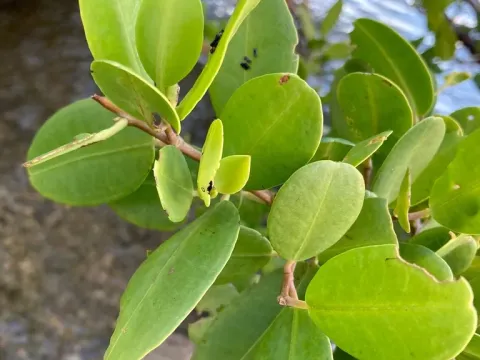
Laguncularia (Laguncularia racemosa), commonly known as the white mangrove, belongs to the Combretaceae family. It is a vital woody plant that thrives in tropical and subtropical coastal regions, primarily along the Atlantic coasts of the Americas and West Africa.
What the section contains

Laguncularia
As a halophytic species, this plant has evolved unique physiological mechanisms to survive in saline environments. It occupies a niche in the high intertidal zone, preferring substrates that are periodically inundated by tides yet remain relatively well-drained during low water periods.
The morphology of the plant includes simple, opposite, elliptical leaves and a root system that often displays pneumatophores. These specialized roots are essential for gas exchange in the waterlogged, anaerobic mud characteristic of its natural habitat.
Climate requirements for successful growth include consistent warmth throughout the year and high humidity. While it does not require formal agricultural sowing, its natural propagation depends on water currents distributing its buoyant seeds to suitable mudflats.
Economic applications are centered on its ecological service, as it acts as a primary buffer against coastal erosion. Additionally, the wood is utilized by local populations for construction, fencing, and the production of durable charcoal due to its natural resistance to decay.
Habitat loss represents the most significant threat to Laguncularia populations, primarily driven by land reclamation and the conversion of coastal areas into shrimp farming operations.
Insect pests, including various boring beetles and defoliators, can pose a risk to individual health, especially in areas where the forest density has been fragmented by human activity.
Pollution from agricultural runoff, containing fertilizers or pesticides, can cause nutrient imbalances in the soil, leading to weakened plants susceptible to secondary fungal pathogens.
Rising sea levels driven by climate change present a long-term risk, as the species may be unable to migrate inland quickly enough to escape permanent submergence.
Effective management requires rigorous environmental protection policies, including the prevention of deforestation and the implementation of reforestation programs that restore native mangrove buffers along vulnerable coasts.