
White mangrove
Laguncularia racemosa
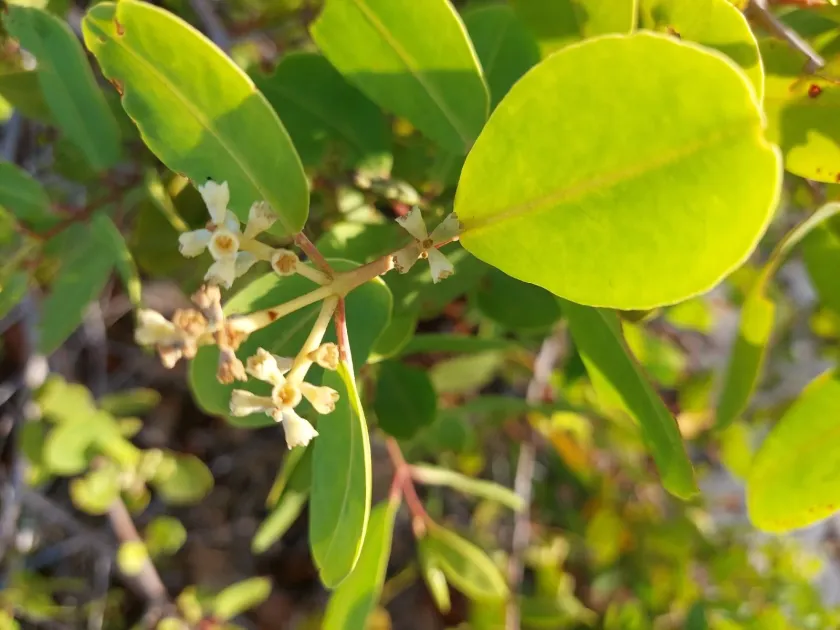
Description
Sowing dates
The reproduction of Laguncularia racemosa relies on viviparous seeds known as propagules, which are dispersed by tides.
In restoration projects, propagules are collected from mature trees once they are fully developed and ready to detach.
Planting is carried out in soft, intertidal mudflats where the root system can anchor itself effectively into the substrate.
The ideal planting window is the onset of the wet season when the water salinity levels are lower, supporting seedling establishment.
Care must be taken to ensure seedlings are positioned correctly according to tidal levels to prevent premature dehydration or submersion.
Growing requirements
As a member of the Combretaceae family, this plant is perfectly adapted to saline coastal environments across the tropics.
It flourishes in high-light conditions and requires consistent, warm temperatures throughout the year to maintain growth.
The soil must be a mixture of sediment and silt, providing necessary nutrients while allowing for water saturation.
The species utilizes pneumatophores, which are specialized vertical roots that allow the plant to breathe in waterlogged soils.
It is moderately tolerant to varying salt concentrations, which makes it a resilient species in challenging littoral zones.
Yield
While not a traditional food crop, the white mangrove provides immense value through ecosystem services and coastal stabilization.
The timber is historically significant for local construction because of its exceptional resistance to marine pests and moisture.
It serves as a sustainable source of high-quality charcoal, a vital energy source for many coastal communities globally.
Mangrove forests dominated by this species support vast biodiversity, acting as nurseries for various fish and crustacean species.
The extensive root system captures sediments, which aids in preventing shoreline erosion and protects inland agricultural fields.
Main diseases and pests
Human-induced activities such as shrimp farming and urban expansion are the primary drivers of mangrove habitat destruction.
Outbreaks of defoliating insects can occasionally stress individual trees, reducing their overall vitality and biomass production.
Oil spills represent a catastrophic threat, as toxic compounds can clog the pneumatophores, leading to plant suffocation.
Rising sea levels pose a long-term risk, as the landward migration of these forests is often blocked by man-made infrastructure.
Invasive species can displace native mangrove seedlings if the native habitat has been previously disturbed or fragmented.