

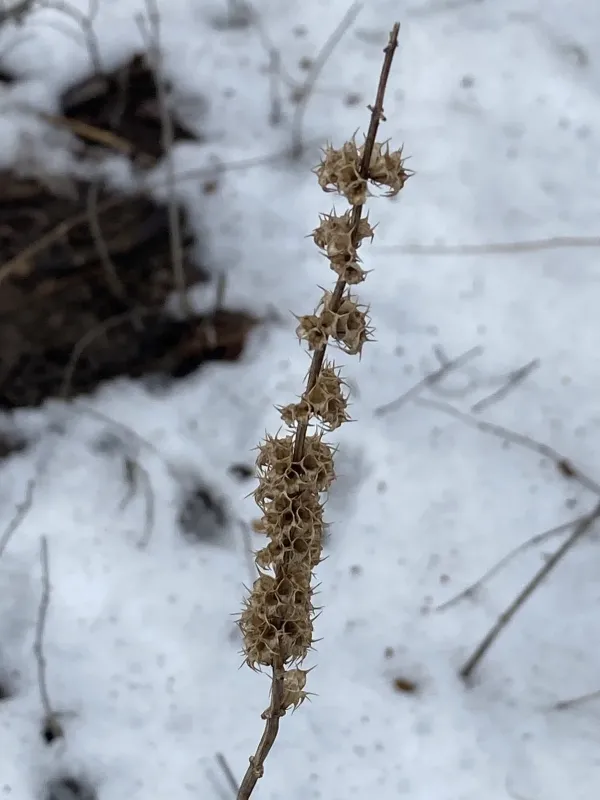
Description
Sowing dates
Motherwort (Leonurus cardiaca) is a perennial herbaceous plant belonging to the Lamiaceae family. Seeds are typically sown in late autumn to benefit from natural winter stratification, which enhances germination rates.
Spring sowing is also possible but requires pre-treatment of seeds, such as moist cold stratification for at least 3-4 weeks to break dormancy effectively.
For large-scale cultivation, seeds should be planted in rows spaced 45 to 60 centimeters apart to provide sufficient space for mechanical weeding and plant development.
The optimal seeding depth is shallow, approximately 1 to 2 centimeters, as seeds are small and sensitive to deep burial which can inhibit emergence.
Establishing a dense stand is crucial in the first year, as motherwort grows slowly and requires careful competition management against aggressive weeds.
Growing requirements
Motherwort prefers well-drained, fertile soil, ideally neutral or slightly alkaline. It thrives in loamy soils that can retain moisture while preventing waterlogging.
This crop is highly winter-hardy and adapts well to various temperate climates, making it a reliable perennial for medicinal herb farms in many regions.
Full sun exposure is essential for high concentrations of bioactive compounds, as plants grown in shade tend to be less potent and show reduced biomass.
Prior to planting, thorough soil preparation is necessary to remove perennial rhizomatous weeds, as motherwort is sensitive to initial competition during the seedling stage.
Occasional nitrogen-rich fertilization during the active vegetative growth phase can significantly boost herb yield without compromising the plant's structural integrity.
Yield
The average yield of dried above-ground biomass ranges from 1 to 2 tons per hectare, depending on soil quality, weather conditions, and fertilizer application.
Peak productivity is typically observed during the second and third years of the stand life, once the root system has fully established and the plants have reached maturity.
Water management is critical; while drought-tolerant, supplemental irrigation during dry periods in late spring and early summer will increase overall herb volume.
Regular maintenance of rows and thinning of excessively dense patches can ensure higher quality harvests and prevent overcrowding that leads to stunted growth.
With proper management, the plantation can remain productive for up to 5-7 years, providing consistent annual yields for pharmaceutical processing.
Main diseases and pests
Aphids and various bug species are the primary pests that damage young leaves and terminal shoots, directly impacting the aesthetic and medicinal quality of the raw material.
Powdery mildew represents the most significant fungal threat, especially in humid conditions or in poorly ventilated field stands, where air circulation is restricted.
Root rot can occur in areas with poor drainage, leading to significant gaps in the plantation and weakening the plant's overall resistance to environmental stress.
Integrated pest management strategies focusing on biological control and proper crop spacing are preferred over chemical pesticides to maintain organic standards.
Sanitation practices, such as removing debris and infected plants at the end of the season, are essential to prevent the carry-over of pathogens into the following year.
Harvesting
Harvesting should occur at the peak of the flowering stage, as this is when the secondary metabolites, including leonurine and alkaloids, are at their highest concentration.
The upper 30 to 40 centimeters of the flowering stems are cut, leaving the lower woody parts of the plant, which are less desirable for herbal extraction.
Immediate drying is required after harvest to prevent enzymatic degradation and mold growth, which can rapidly spoil the herb in high-moisture conditions.
Drying is optimally performed in temperature-controlled rooms or mechanical dryers at 40-50 degrees Celsius to maintain the green color and aromatic profile.
Once dried to a moisture content of approximately 10-12 percent, the crop should be stored in cool, dark, and dry conditions prior to packaging and commercial distribution.
Content graph
Connections · Motherwort
Most often together:
Marketplace
Products · 2
