
Ixeris stolonifera
Ixeris stolonifera
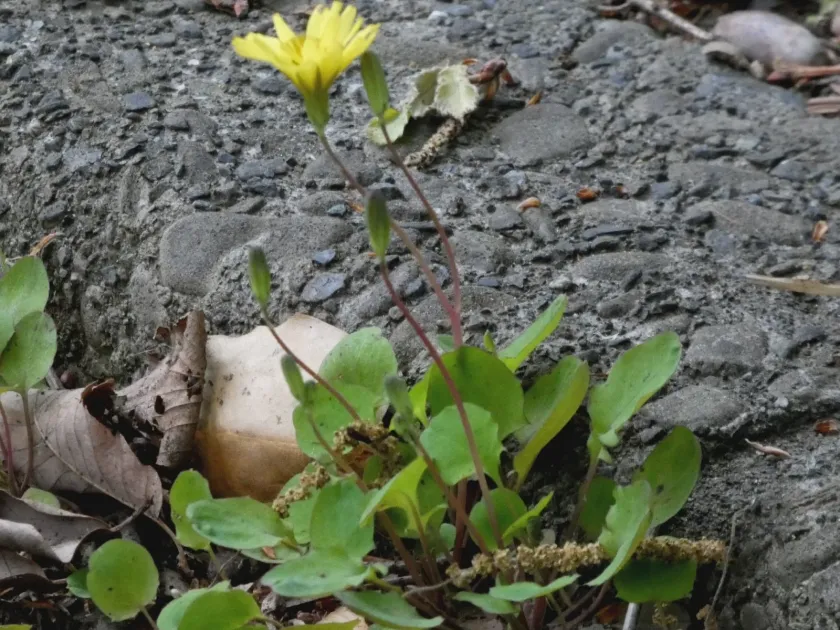
Description
Sowing dates
Ixeris stolonifera is a perennial herbaceous plant belonging to the Asteraceae family. It is distinct for its aggressive vegetative reproduction, utilizing stolons — thin, horizontal stems that root at nodes to form a dense colony.
Originating from East Asia, this plant is well-adapted to varied temperate environments. It is frequently found in meadows, forest edges, and disturbed soils where it can effectively outcompete other smaller vegetation.
Sowing or planting is best initiated in early spring once soil temperatures remain consistently above 12 degrees Celsius. The plant establishes rapidly, making it an excellent candidate for ground cover applications.
Botanically, it forms basal rosettes of leaves from which the stolons extend. This growth habit allows it to spread quickly and colonize large areas, providing effective soil erosion control in specific environments.
Beyond its ecological role, the plant is historically significant in traditional Asian herbal practice. Its cultivation is focused on harvesting the aerial parts for culinary and wellness-oriented applications.
Growing requirements
Ixeris stolonifera thrives in fertile, well-draining soils with a slightly acidic to neutral pH. While it is hardy, it requires consistent moisture to maintain the succulence and growth rate of its leaves.
The plant demonstrates a preference for sunny locations, although it possesses sufficient plasticity to perform well in partial shade. Excessive heat may necessitate more frequent irrigation to prevent dehydration and wilt.
Optimal growth occurs within a temperature range of 18 to 25 degrees Celsius. It exhibits good winter hardiness, provided the soil is not prone to deep freezing while saturated, which could damage the stolon network.
Nutrient requirements are moderate, but an application of balanced organic compost during the spring boost can significantly increase biomass production. Nitrogen-rich fertilizers should be applied sparingly to avoid overly succulent growth.
For cultivation in heavy soils, incorporating sand or grit is recommended to facilitate drainage. Proper aeration of the root zone is crucial for preventing root suffocation during periods of high precipitation.
Main diseases and pests
The species is generally robust, but high-density plantings may become susceptible to fungal pathogens like powdery mildew. Good air circulation between plants is the most effective cultural control method.
Slugs and snails are the primary pests, as they are attracted to the tender, succulent foliage of the plant. Barriers such as crushed eggshells or copper tape can be effective in smaller-scale agricultural setups.
Root rot, often caused by waterlogging, is a persistent threat in poorly drained soils. Avoiding overhead irrigation during cool, humid weather can significantly reduce the incidence of soil-borne disease.
Crop rotation remains a fundamental practice to maintain soil health. Planting Ixeris in the same location for multiple consecutive seasons may increase the risk of soil-borne pathogen accumulation.
Integrated Pest Management (IPM) strategies, including monitoring and biological controls, are advised. Keeping the area free of common garden weeds prevents them from acting as alternative hosts for viruses.
Harvesting
Harvesting is usually carried out during the peak vegetative stage, shortly before the plant initiates flowering. This ensures the highest concentration of bioactive compounds within the foliage.
The crop is harvested by cutting the leafy rosettes just above the soil level. The plant's vigorous nature allows for multiple cuts within a single growing season, provided there is adequate recovery time.
Post-harvest handling requires immediate cooling or processing. Leaves should be dried in a shaded, well-ventilated area to preserve the integrity of their nutritional and chemical constituents.
Storage of fresh foliage is limited; it should be held at temperatures between 2 and 4 degrees Celsius to maintain quality. For long-term storage, drying or freezing are the preferred preservation methods.
Professional harvesting may require specialized machinery to ensure clean cuts without damaging the stolon network. Proper handling preserves the product's market value and ensures a high-quality end result.