
Indian gooseberry
Phyllanthus emblica L.
Description
Growing requirements
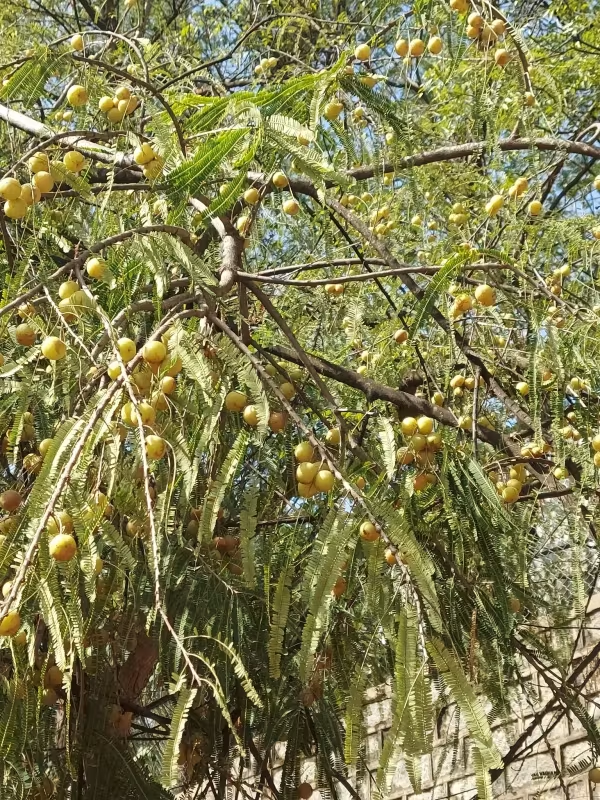
Indian gooseberry (Phyllanthus emblica), also known as Amla, belongs to the Phyllanthaceae family. It is a deciduous or evergreen tree that can grow up to 18 meters tall, featuring feathery, light green foliage that provides a delicate aesthetic to orchards.
Native to tropical and subtropical regions of Asia, specifically India and China, the tree thrives in areas with high humidity and warmth. It requires deep, well-drained loamy soil with a pH range that is ideally neutral or slightly acidic.
The climate must be frost-free, as young trees are extremely sensitive to low temperatures. While the species is resilient to moderate dry spells, consistent irrigation is necessary for optimal development and fruit production in commercial plantations.
Sunlight is crucial for the tree’s growth. While saplings benefit from partial shade during their first years of establishment, mature trees require full sun exposure to maintain vigorous photosynthesis and structural integrity.
Standard agronomic practices include mulching around the base to conserve soil moisture and regular applications of organic manure or compost to enrich the soil profile, especially during the monsoon or pre-planting season.
Yield
The time to reach fruit-bearing age depends on the propagation method: grafted plants typically begin producing fruit after 4 to 5 years, while those grown from seeds can take up to 8 years. The tree remains productive for over 50 years.
An average mature, healthy Indian gooseberry tree can yield between 50 and 100 kilograms of fruit per season. Yield potential is influenced by soil quality, cultivar selection, and the intensity of orchard management.
The fruits are spherical, greenish-yellow berries, roughly 2–3 cm in diameter, known for their sour and astringent profile. They are commercially prized for their high Vitamin C content and diverse medicinal properties.
Host industries include pharmaceuticals, nutraceuticals, and the cosmetic sector, where Amla extract is a key component in hair and skin care products. Processing raw fruits into juices, powders, or dried snacks adds significant value.
Regular pruning is essential to improve light penetration into the center of the canopy, which not only encourages new shoot development but also significantly increases the overall yield per tree.
Main diseases and pests
The crop is susceptible to certain pests, including fruit borers and various leaf-eating caterpillars. Integrated Pest Management (IPM) strategies, including the use of pheromone traps, are recommended to control these populations.
Common diseases affecting Phyllanthus emblica include rust, leaf spot, and sometimes collar rot caused by poor soil drainage. Managing orchard hygiene is critical to preventing the spread of these fungal pathogens.
Fungicides can be applied as a preventive measure, particularly during the humid monsoon season when fungal activity peaks. It is vital to adhere to safe harvesting intervals if pesticides are used.
Root system health is paramount; therefore, farmers must avoid waterlogged conditions that can trigger root rot. Improving soil aeration through shallow hoeing or drainage ditches is a common solution.
Maintaining strong tree vigor through balanced macro and micronutrient fertilization helps the trees resist minor attacks from pathogens and environmental stressors.
Harvesting
Harvesting is performed manually as the fruits are delicate and bruise easily. Collectors must handle the berries with care to ensure they remain intact for market distribution or processing.
The harvesting season typically spans from late autumn to early winter. It is crucial to pick the fruits when they are fully mature, as they do not ripen further once removed from the tree branch.
Post-harvest handling requires sorting and grading to remove damaged or overripe fruit. Because the fruit is perishable, it should be kept in a cool, ventilated area immediately after being harvested.
For long-distance transportation, fruits should be packed in breathable crates or mesh bags to prevent mold growth caused by trapped moisture and heat.
Prompt processing is the best way to handle large volumes of fruit, whether for industrial drying or raw juice extraction, ensuring that the nutrient profile remains preserved.