
Otaheite gooseberry
Phyllanthus acidus (L.) Skeels
Description
Sowing dates
The Otaheite gooseberry (Phyllanthus acidus) is a tropical tree belonging to the Phyllanthaceae family. In agricultural practice, it is propagated primarily through seeds or vegetative cuttings sourced from healthy mother plants.
For nursery establishment, seeds are sown in a well-draining, nutrient-rich potting medium. Maintaining a consistent temperature of around 25°C to 30°C is critical to ensure a high germination rate and vigorous early development of the seedlings.
The trees exhibit a rapid growth rate once established in suitable soil conditions. When transplanting to the field, adequate spacing is required to ensure optimal canopy expansion, which facilitates better light penetration and air circulation.
Professional growers often utilize grafting techniques to propagate superior varieties, which ensures fruit uniformity and consistency in taste. Grafting also reduces the juvenile phase, allowing the tree to bear fruit at an earlier age compared to seed-grown trees.
As a tropical species, the tree undergoes continuous growth throughout the year. It does not possess a dormant phase, making it highly dependent on consistent environmental parameters for successful development and productivity.
Growing requirements
The culture thrives in tropical and subtropical regions. It is highly intolerant to frost and cold winds, which limits its commercial cultivation to frost-free zones where humidity levels remain relatively high throughout the year.
Soil requirements for the Otaheite gooseberry include fertile, loamy, and well-drained conditions. The plant is sensitive to waterlogging, which can cause root rot; therefore, selecting sites with proper slope or installing drainage systems is essential.
The tree requires full sun exposure to reach its maximum yield potential. While it can tolerate partial shade, insufficient light will significantly diminish fruit production and may lead to the development of a spindly and less productive canopy structure.
Water management is crucial during the flowering and fruit-setting stages. Although established trees show some tolerance to short periods of drought, consistent moisture is necessary to maintain fruit size and prevent premature shedding of the blossoms.
Fertilization schedules should prioritize balanced NPK formulations with an emphasis on potassium during the fruiting season. Organic amendments are also highly beneficial for improving soil structure and supporting the tree’s overall vitality.
Yield
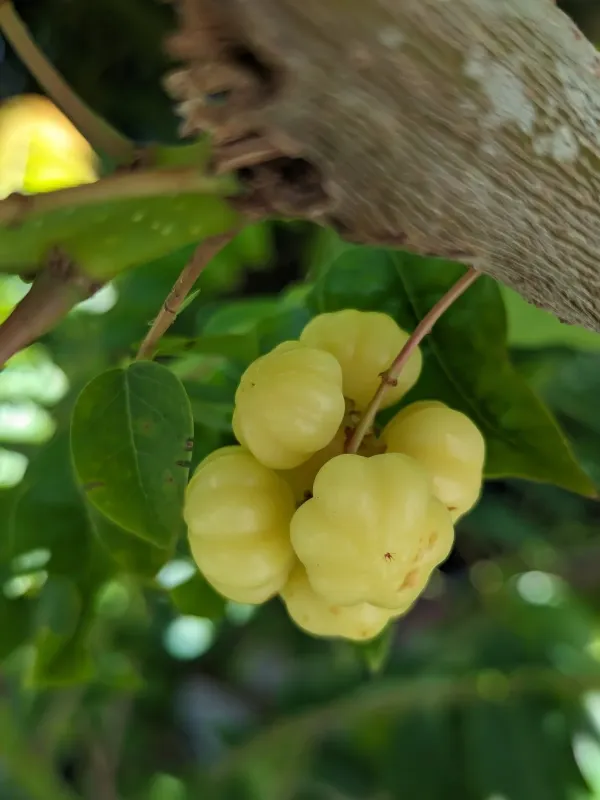
Fruit production typically commences within three to four years after planting. One of the unique botanical characteristics of this species is its cauliflorous nature, where fruits develop in clusters directly on the trunk and main branches.
The fruits are small, ribbed, yellowish-green berries known for their intensely sour flavor. Due to this high acidity, they are rarely consumed fresh but are highly valued in food processing for making preserves, jellies, and sauces.
Yields vary depending on the variety and management practices. In optimal tropical environments, mature trees can be incredibly prolific, often yielding multiple crops per year, which makes the plant a significant resource for local agro-industries.
Post-harvest management is critical due to the fragile nature of the fruits. They should be processed quickly to maintain their nutritional profile and characteristic tart flavor, which is a staple ingredient in many traditional culinary dishes.
Systematic pruning is a standard agronomic practice to manage tree height and improve harvesting efficiency. By removing old or dense wood, growers can stimulate new growth and maintain the health of the tree over its long lifespan.
Main diseases and pests
The Otaheite gooseberry is primarily threatened by fungal pathogens that thrive in humid environments. Leaf spots are a common issue that can reduce the tree's photosynthetic capacity if not managed through proper canopy thinning.
Insect pests, including aphids, mealybugs, and various caterpillar species, can cause significant damage to young foliage. Integrated pest management (IPM) strategies, including biological controls, are recommended to maintain tree health.
Root rot caused by soil-borne fungi is a major concern in heavy or poorly drained soils. Prevention involves rigorous soil management and avoiding excessive irrigation, especially during periods of high ambient humidity.
Scale insects can occasionally infest the stems, weakening the tree by sap-feeding. Regular inspection and the application of horticultural oils or soap solutions are effective methods for controlling these infestations without harsh chemical residues.
Maintaining high hygiene standards in the orchard is essential. Removing fallen fruits and diseased branches prevents the buildup of inoculum, thereby reducing the incidence and severity of common horticultural diseases.
Harvesting
Harvesting is labor-intensive and performed manually due to the delicate nature of the clusters. Care must be taken to remove the clusters without stripping the bark or damaging the delicate buds located on the wood.
Harvesting timing is determined by the color of the fruit, shifting from bright green to a pale, translucent yellow. Picking at the correct maturity stage ensures that the fruit maintains its structural integrity during transport.
Once picked, fruits should be placed in well-ventilated crates to prevent heat buildup and rapid spoilage. Storage in cool environments, ideally around 10–12°C, can extend shelf life until the fruits can be processed.
Grading is typically done at the point of harvest. Fruits showing signs of physical damage or rot must be discarded immediately to prevent the spread of decay to healthy fruits within the same container.
Industrial processing follows, where the fruits are cleaned and often pickled or preserved. Because of their high acidity, they serve as excellent natural preservatives, which is a common technique used to stabilize the product for export.