
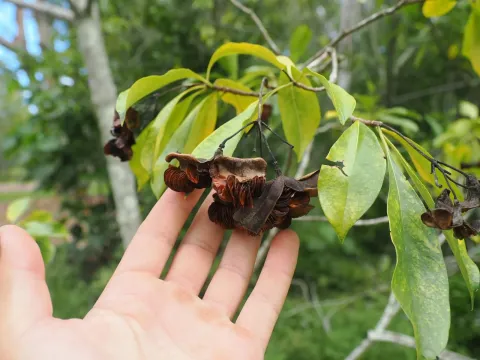
Hymenosporum
Hymenosporum
Hymenosporum, a genus containing the single species Hymenosporum flavum, belongs to the family Pittosporaceae. Originating from the rainforests of Australia and New Guinea, this evergreen tree is renowned for its glossy foliage and clusters of fragrant, color-changing flowers that emerge in spring.
What the section contains

Hymenosporum
The plant requires a warm, frost-free climate to thrive. It is typically grown in subtropical regions where temperatures remain consistently mild throughout the year. Cold sensitivity is a primary limiting factor, and the plant must be protected from frost in order to maintain its health and structural integrity.
Regarding soil requirements, Hymenosporum prefers deep, fertile, and well-drained soils. A sandy loam or rich organic soil with a slightly acidic to neutral pH is ideal. Ensuring excellent drainage is paramount, as the roots are susceptible to rotting if left in saturated soil conditions for extended periods.
Agrotechnical management involves regular moisture supply, especially during the establishment phase and peak summer heat. While the tree is somewhat drought-tolerant once established, supplemental irrigation during dry spells improves floral development and prevents premature leaf drop caused by stress.
The plant is widely utilized in professional landscaping and urban beautification. Its upright, architectural habit makes it an excellent choice for street planting, screening, and as a focal point in private gardens. It is also favored for its ability to attract native bird species and pollinators.
Common health issues include fungal root rot, which typically manifests under conditions of poor soil aeration and waterlogging. Managing irrigation schedules and selecting planting sites with proper drainage are the most effective strategies for preventing these soil-borne diseases.
Pest pressures primarily include scale insects and mealybugs, which tend to infest the undersides of leaves and soft stems. Monitoring for these pests and implementing integrated pest management techniques, such as horticultural oils or natural predators, ensures the long-term vitality of the tree.