
Yellow Frangipani
Hymenosporum flavum (Hook.) F.L. Muell.
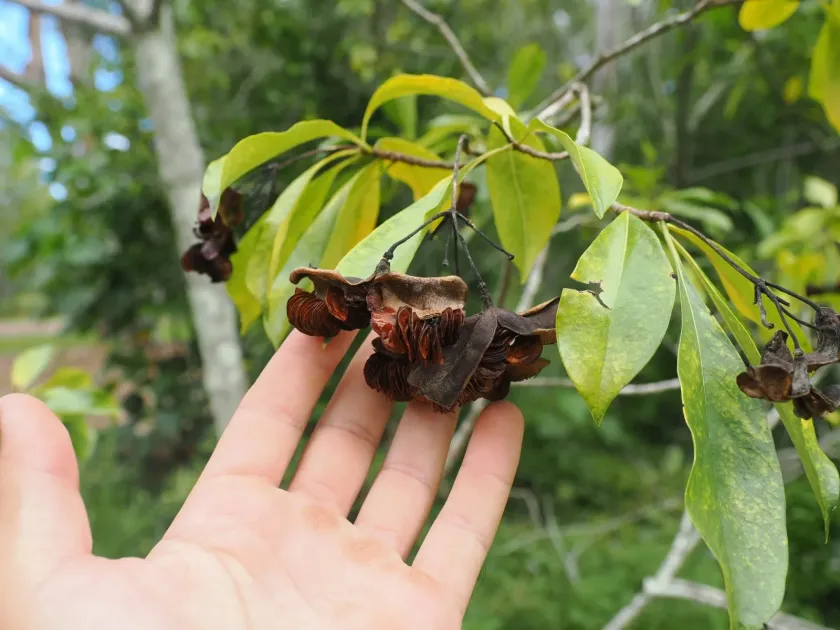
Description
Growing requirements
Hymenosporum flavum, commonly known as the Yellow Frangipani, belongs to the Pittosporaceae family. This evergreen tree is native to the rainforests of Australia and New Guinea, where it thrives in warm, humid environments.
The plant is distinguished by its highly fragrant, nectar-rich flowers. It exhibits a naturally upright growth habit, which makes it an excellent choice for ornamental gardening, providing both shade and aesthetic value.
Cultivation requires deep, well-drained, and nutrient-rich soil. While the species is somewhat adaptable, it performs best in soils with a slightly acidic to neutral pH, avoiding heavy clays that tend to retain excess moisture.
Regarding climate, the Yellow Frangipani is suited for tropical and subtropical regions. It requires protection from strong winds and frost, as it is relatively sensitive to cold temperatures, especially during the early stages of its development.
In terms of agricultural management, regular watering during dry spells and the application of balanced organic fertilizers during the active growing season are essential for maintaining the health and vigor of the plant.
Main diseases and pests
The primary concern for growers is root rot, which typically develops in poorly drained soil conditions. Maintaining an adequate drainage layer is a fundamental agronomic requirement for this crop.
Pests such as scale insects and mealybugs can affect the foliage, particularly in environments with poor air circulation. Regular monitoring of the canopy is recommended to detect any infestations before they become severe.
Fungal leaf spot diseases may appear during periods of high humidity and poor ventilation. Pruning to thin the canopy can improve airflow and reduce the incidence of such infections throughout the growing season.
Nutrient deficiencies, particularly iron or magnesium, can manifest as yellowing of the leaves. Maintaining proper soil health through scheduled soil testing and fertilization helps to keep the plants lush and productive.
In regions where the plant is exposed to extreme weather, wind damage to the branches is a notable threat. Providing structural support for young trees is a standard practice to prevent structural failure and ensure long-term stability.