
Hydrophyllum canadense
Hydrophyllum canadense
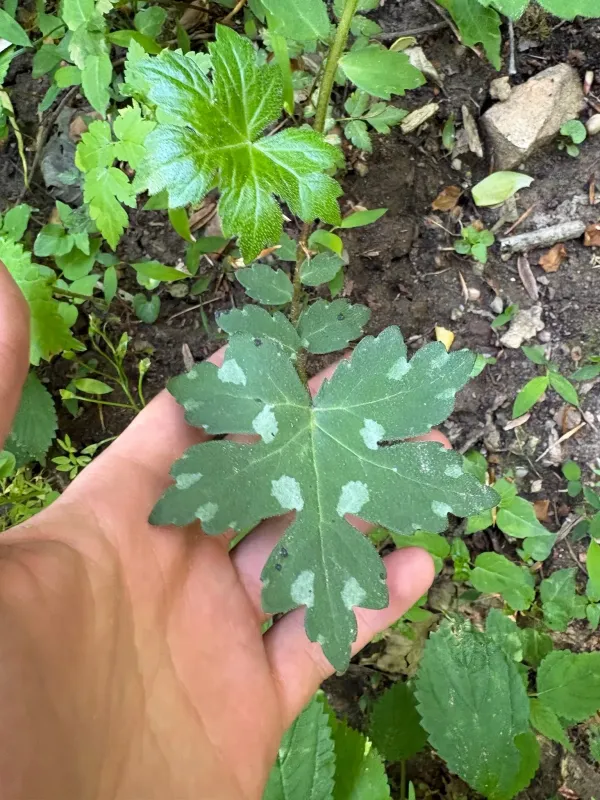
Description
Sowing dates
Sowing seeds of Hydrophyllum canadense is best performed in the autumn season directly into open soil or nursery containers. For successful germination, seeds require a period of cold stratification, which mimics natural environmental cycles found in their native habitat.
Spring sowing is feasible only after artificial stratification of the seeds in a cold environment for 30 to 60 days. The optimal sowing depth is 0.5–1 cm, ensuring protection from desiccation while allowing enough moisture for the seeds to sprout effectively.
Vegetative propagation via rhizome division is best conducted in early spring before the start of active sap flow or in late summer after the flowering phase. This remains the most productive method for maintaining the specific ornamental traits of the plant.
Transplanting seedlings to their final location should be done with 30–40 cm spacing, allowing the culture to quickly form a dense leaf carpet. Young plants require consistent watering during their first year to ensure successful root establishment.
The choice of planting site must account for the species' natural ecology: the plant thrives in areas sheltered from direct sunlight, mimicking the conditions of a forest canopy.
Growing requirements
Hydrophyllum canadense belongs to the Boraginaceae family and is a perennial herbaceous plant adapted to the temperate climates of North America. In its natural habitat, it occupies the lower layers of deciduous forests, where it forms dense, widespread colonies.
The primary soil requirement involves high fertility, a loose structure, and excellent moisture retention capacity. Ideal conditions include forest podzolic or neutral loamy soils rich in leaf mold and organic matter.
The plant exhibits significant shade tolerance and performs poorly under direct ultraviolet exposure. Optimal development is observed in partial shade or diffused light conditions found under a tree canopy.
Moisture levels must remain consistently high throughout the entire growing season. The culture is sensitive to drought as its wide leaf blades lose water rapidly, making mulching around the base an essential part of the care routine.
Basic agrotechnology includes the timely application of organic fertilizers at the start of the season, which stimulates vegetative mass and ensures lush flowering in late spring.
Main diseases and pests
The most serious threats to this crop are fungal diseases that develop under conditions of poor air circulation and water stagnation. Specifically, powdery mildew outbreaks may occur during sharp temperature fluctuations.
Regarding pests, slugs and snails pose the greatest damage, as they feed on the succulent leaves during wet periods. Control measures involve using both physical barriers and approved biological agents to maintain plant health.
Root rot is a possibility in heavy, poorly drained soils. Preventive measures include improving soil aeration and ensuring the site does not become waterlogged during the dormant winter period.
Aphids can infest flower stalks during the budding phase, requiring regular plant monitoring and the application of insecticides only when infestation thresholds are exceeded.
Adherence to sanitation protocols and timely weed removal significantly reduce the infectious background in the field and contribute to the longevity of the ornamental plantings.
Harvesting
Economic use of Hydrophyllum canadense is primarily limited to ornamental purposes; therefore, traditional harvest as applied to field crops is not applicable. The main task is maintaining the aesthetic form of the shrub.
After the vegetation period ends, the aerial parts of the plant die back naturally, requiring sanitary pruning of dry stems in late autumn. This prevents the accumulation of plant debris and harborages for pests.
If seed collection is desired, inflorescences should be left until full maturity, then carefully cut and dried in a well-ventilated area. Seeds require immediate cleaning to remove floral remnants.
To create dense landscape compositions, rejuvenating division of clumps should be performed every 4–5 years. This prevents thinning of the plant's center and maintains high density in the ornamental cover.
Collected rhizome material can be sold as nursery stock to specialized gardening centers, provided they are packed in moist peat substrate to prevent dehydration during transit.