
Hybrids of Fuchsia arborescens and Fuchsia paniculata
hybrids between Fuchsia arborescens Sims and Fuchsia paniculata Lindl.
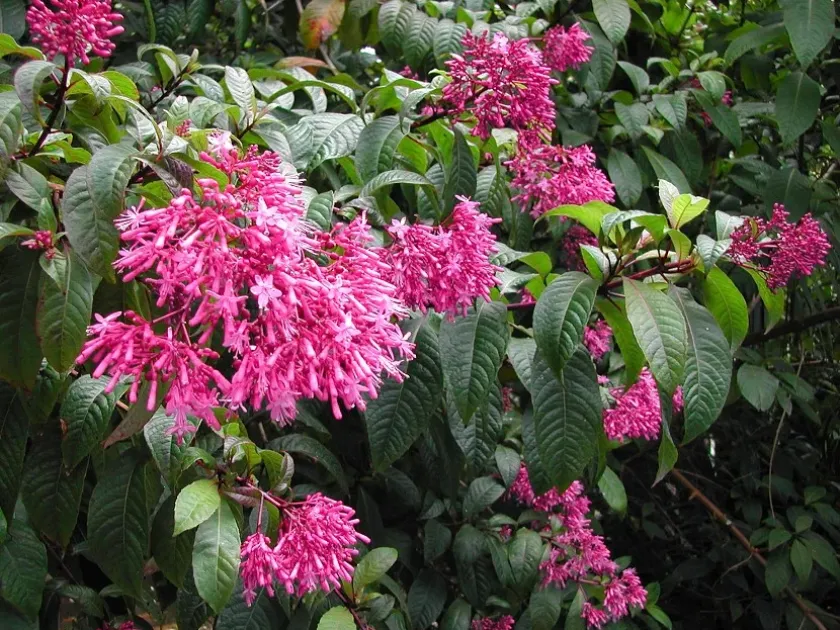
Description
Growing requirements
These hybrids, belonging to the Onagraceae family, represent a distinct group of upright, shrub-like fuchsias that result from the crossing of highland species native to the cloud forests of Central and South America.
Botanically, these plants are recognized for their large terminal panicles of small, tubular flowers, which differ significantly from the classic hanging-basket fuchsia varieties and require larger containers or open ground to reach their full potential.
Cultural requirements involve high levels of ambient humidity and bright, indirect light, as these plants are adapted to the filtered sun conditions found under the canopy of subtropical forests.
The substrate should be a well-draining, nutrient-rich potting mix that retains moisture without becoming waterlogged, typically comprising peat, pine bark, and organic compost to sustain healthy growth.
Temperature management is critical, as these plants thrive in moderate conditions and show physiological stress if exposed to temperatures consistently above 28°C or below 10°C, necessitating careful seasonal monitoring.
Main diseases and pests
Whitefly infestations are the most common agricultural challenge, often proliferating in greenhouse environments where they colonize the undersides of leaves and transmit viral pathogens if not controlled early.
Root rot caused by Oomycetes, specifically Phytophthora, remains a primary threat when the irrigation regime is not properly calibrated with the plant's actual water uptake during cooler months.
Aphids tend to target the tender apical meristems and flower buds, necessitating a rigorous scouting program and the potential use of systemic insecticides or biological controls to protect the inflorescences.
Powdery mildew can severely affect foliage quality if there is insufficient air movement, particularly during transitions between warm days and cool, damp nights that promote fungal spore germination.
Fungal leaf spot diseases may appear if foliage is kept wet for extended periods, suggesting that all irrigation should be applied directly to the soil to keep leaves dry and healthy throughout the growing season.