
Fuchsia paniculata
Fuchsia paniculata Lindl.
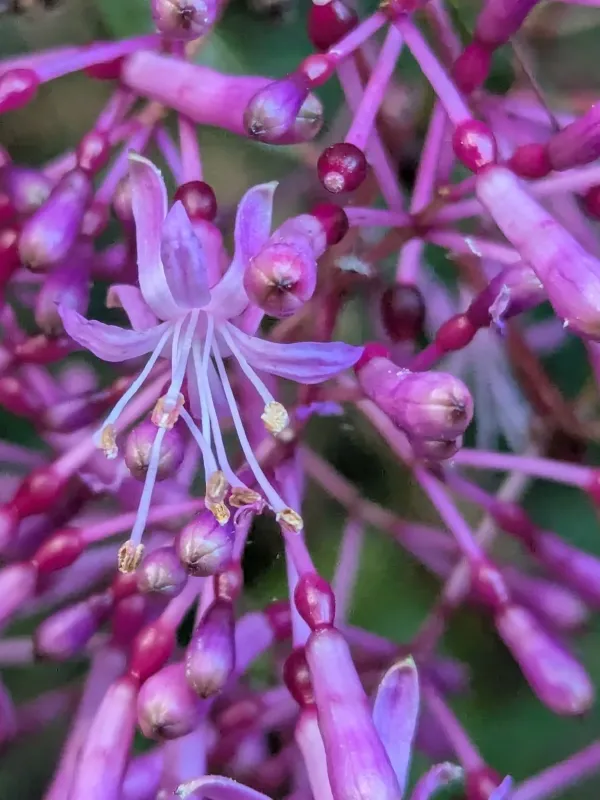
Description
Sowing dates
Fuchsia paniculata, a member of the Onagraceae family, is a distinct species known for its panicle-like inflorescences. The seeds are very small and require a light, well-draining substrate for successful germination.
Sowing is best performed in early spring. The seeds should be surface-sown and gently pressed into the soil, as they need light for optimal germination results. Maintaining a constant temperature of 20-22 °C is critical during this stage.
A high humidity environment is necessary during the initial weeks. Using a transparent cover or a specialized propagator helps maintain the required microclimate for the developing seedlings.
Seedlings should be pricked out into individual containers once they develop two or three pairs of true leaves. This promotes the development of a healthy root system, which is essential for the plant's long-term vigor.
Propagation via cuttings is the most efficient method for maintaining desirable traits. Semi-hardwood cuttings taken in late spring root readily in a mixture of sand and peat under diffused light.
Growing requirements
Native to the high-altitude regions of Central America, this species prefers cool to moderate temperatures. It thrives best in environments that avoid extreme heat or prolonged direct sunlight.
The soil should be rich in organic matter and possess excellent drainage properties. A slightly acidic to neutral pH level is ideal to ensure the plant can effectively absorb essential microelements.
Proper light management involves providing bright, indirect sunlight. Exposure to harsh midday sun can lead to leaf chlorosis or scorching, requiring the use of shade cloth or strategic placement in the garden.
Irrigation must be balanced; the soil should remain moist but never waterlogged. During the growing season, a balanced liquid fertilizer applied bi-weekly supports healthy foliage and prolific blooming.
Winter care involves a period of dormancy. During this phase, temperatures should be reduced to 12-15 °C, and irrigation should be significantly decreased to prevent root rotting and stress.
Main diseases and pests
Spider mites are the most persistent pests for Fuchsia paniculata, especially in low-humidity conditions. They feed on the underside of leaves, causing yellowing and webbing that can quickly ruin a plant.
Whiteflies can infest the plant rapidly, particularly in greenhouses or during the summer months. Regular monitoring and the use of yellow sticky traps or insecticidal soaps are recommended for control.
Powdery mildew is a common fungal threat caused by poor air circulation and fluctuating moisture levels. It appears as a dusty white coating on leaves and stems, requiring immediate treatment with fungicides.
Root rot is often the result of heavy soils or overwatering. Maintaining adequate drainage and ensuring the soil dries slightly between waterings is the most effective preventative measure against this condition.
Aphids tend to congregate on the soft, new growth of the plant. If left untreated, they can spread viral infections, making it necessary to implement integrated pest management strategies early in the season.