
Fuchsia arborescens
Fuchsia arborescens Sims
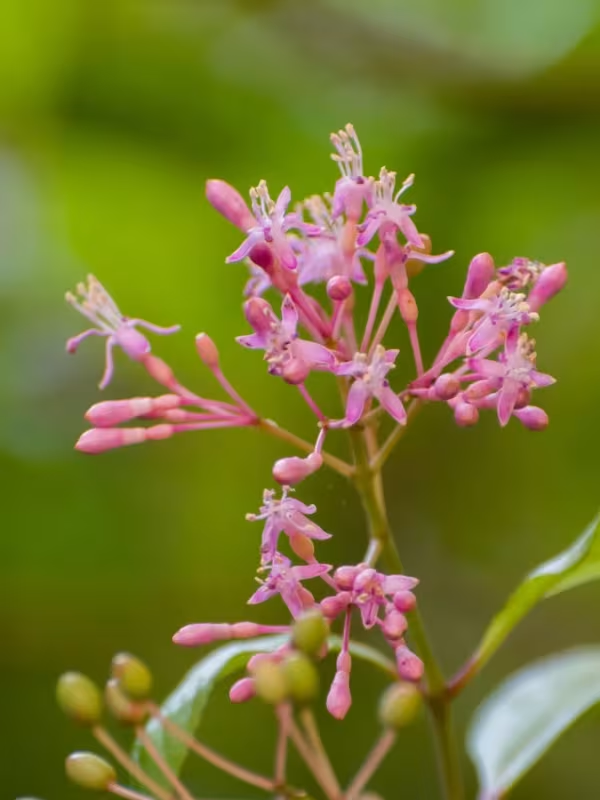
Description
Growing requirements
Fuchsia arborescens is a notable species within the Onagraceae family, distinct for its tree-like, upright habit. Unlike more common trailing fuchsias, this species develops woody stems, capable of growing into a small, elegant tree that adds a unique structural element to indoor gardens.
Native to the high-altitude cloud forests of Mexico, Guatemala, and Panama, this plant thrives in environments that offer high humidity and moderate temperatures. Its historical adaptation to mountainous regions makes it less tolerant of extreme heat and direct tropical sun.
Soil requirements involve a well-draining, nutrient-rich potting medium. A blend consisting of high-quality peat moss, composted bark, and horticultural perlite is recommended to maintain the balance between moisture retention and essential root aeration.
Light conditions are critical for healthy growth; the plant performs best in bright, filtered light. While it can handle partial shade, insufficient light often results in "leggy" stems and reduced flowering, whereas too much direct sun can scorch the foliage.
Water management is the cornerstone of Fuchsia arborescens cultivation. The growing medium should be kept consistently moist but never waterlogged. During the winter, growth slows significantly, requiring the grower to adjust watering intervals to prevent soil saturation and subsequent root issues.
Main diseases and pests
Whiteflies are perhaps the most persistent pest for this species. They cluster on the undersides of the leaves, feeding on sap and excreting honeydew, which can lead to the growth of sooty mold if left untreated for extended periods.
Spider mites often attack the plant when indoor humidity levels drop below optimal. These tiny pests weave fine webs across the foliage, causing a mottled, yellowed appearance. Regular misting and the use of specialized miticides are effective control methods.
Root rot, primarily caused by Phytophthora or Pythium fungi, is a frequent threat when drainage is inadequate. Proper container selection, featuring sufficient drainage holes, is vital for ensuring excess water can escape and the root zone remains healthy.
Botrytis, or gray mold, can affect the flowers and foliage during cool, damp weather with poor air circulation. Removing spent flowers and ensuring adequate spacing between plants significantly lowers the risk of fungal proliferation within the canopy.
Aphids might infest the succulent new growth and developing flower panicles. While generally easy to manage through manual removal or the application of insecticidal soap, quick identification is necessary to prevent them from weakening the plant's overall vitality.