
Citrus hybrids
hybrids between Citrus x clementina hort. ex Tanak, Citrus x paradisi Macfad. and Citrus x tangerina Tanaka
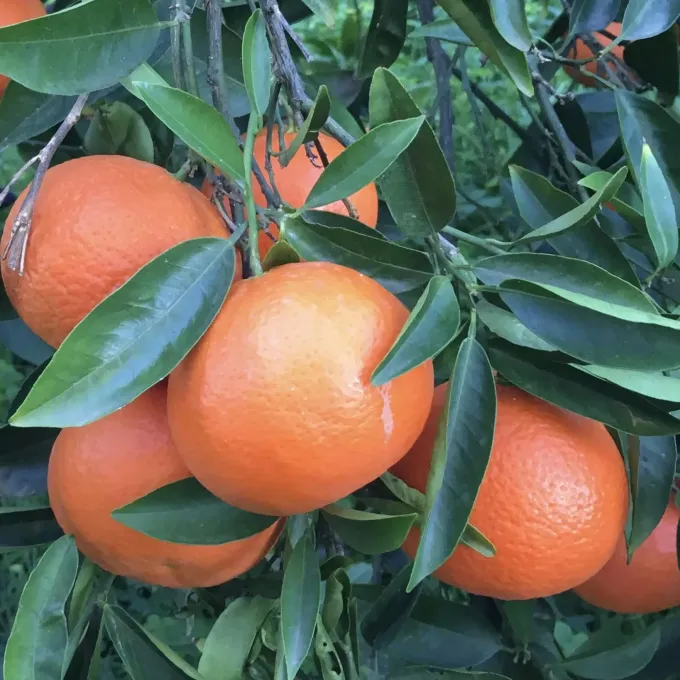
Description
Growing requirements
Citrus hybrids belong to the Rutaceae family. These are evergreen trees that require a warm tropical or subtropical climate for active vegetative growth and fruit production.
For successful development, it is critical to maintain a temperature range between +18 and +28 degrees Celsius. Temperatures below freezing can be fatal to most varieties, causing wood damage and fruit drop.
Soil requirements include high aeration and a fertile layer with a pH level between 5.5 and 7.0. Loamy or sandy soils are considered ideal, provided there is no water stagnation near the roots.
The crop is highly light-demanding and requires intensive lighting for at least 8-10 hours a day. In greenhouse conditions or northern latitudes, supplemental lighting is necessary to maintain growth rates.
Watering must be regular and moderate: the soil should remain slightly moist but not waterlogged. Water requirements increase during the flowering period and should be reduced during the dormancy phase.
Yield
The yield of citrus hybrids depends directly on the age of the tree, the rootstock used, and the intensity of care. In commercial orchards, yield begins to rise from the 4th or 5th year of the plant's life.
The use of modern dwarf rootstocks allows for significantly higher planting density, which increases the total fruit harvest per hectare.
To maintain high yields, it is necessary to perform regular corrective pruning, shaping the canopy so that sunlight reaches all internal parts of the tree.
Balanced fertilization with macronutrients and micronutrients during fruit formation is the key to a quality harvest. Particular attention should be paid to potassium fertilizers.
The biological characteristics of hybrids, such as tangerines or clementines, allow them to provide earlier and more stable yields compared to wild citrus species.
Main diseases and pests
The most dangerous pests include the citrus whitefly and the red spider mite. They suck sap from the leaves, leading to tree weakness and the development of fungal infections.
Scale insects and mealybugs often hide in leaf axils and on the bark, so the tree should be monitored weekly and treated with preventive insecticides.
Fungal diseases, such as anthracnose and gummosis, often occur when moisture levels are poorly managed or when air circulation inside the canopy is insufficient.
To prevent the spread of infection, it is necessary to regularly remove dead or damaged branches and treat cuts with garden sealant or fungicide compounds.
- Compliance with quarantine measures when purchasing seedlings.
- Regular sanitary pruning.
- Use of biological plant protection products.
- Control of humidity in greenhouses.
Harvesting
Harvesting is carried out selectively as the fruits reach their characteristic color and size. Clementines and tangerines turn bright orange when fully ripe.
It is recommended to use sharp pruning shears for harvesting, as pulling fruits by hand often damages the skin and the stem, which reduces storage life.
After harvesting, the fruit should be dried in a well-ventilated area at a moderate temperature. This prevents mold from developing on the skin surface.
Transporting the fruit requires caution, as citrus hybrids are sensitive to mechanical damage, which quickly leads to spoilage.
Correctly harvested fruit, stored in a cool place, can maintain its market quality for several weeks or even months, depending on the variety.