
Homalomena griffithii
Homalomena griffithii
Description
Growing requirements
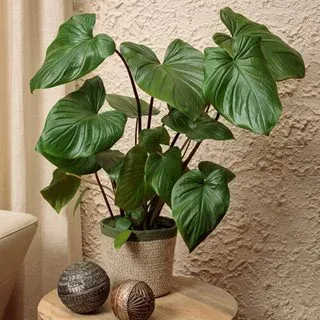
Homalomena griffithii is a distinct species within the Araceae family, native to the tropical rainforests of Southeast Asia. Known for its lush, heart-shaped foliage, it is frequently cultivated as an ornamental plant due to its ability to thrive in shaded environments.
Botanically, the plant features fleshy petioles rising from a robust rhizome. The leaves possess a distinct texture and are prized for their deep green hues, making them a staple in botanical collections and indoor landscaping.
The cultivation requirements are strictly related to its tropical origin. It demands high humidity levels, ideally above 60%, to prevent leaf tip necrosis and to maintain the turgidity of the foliage.
Soil structure is critical for this species; it requires a well-draining, slightly acidic medium. A mixture of peat, perlite, and bark is generally recommended to ensure proper aeration and prevent moisture-related stress.
Thermal requirements necessitate keeping the environment between 20°C and 26°C. Any exposure to cold drafts or temperatures below 15°C should be avoided, as it can cause irreversible damage to the plant's vascular tissues.
Main diseases and pests
Root rot is the most common threat to Homalomena griffithii, usually caused by overwatering or compacted substrate which prevents oxygen reaching the root system.
Spider mites are a frequent pest in indoor environments where air circulation might be poor. These pests thrive in dry conditions and can cause significant damage to the leaf structure if left untreated.
Mealybugs represent another common challenge, often hiding in the crevices of the plant stems where they extract sap and leave behind honeydew that promotes secondary fungal growth.
Effective management includes maintaining a balance between moisture and soil aeration, alongside routine inspections for signs of pest infestations on the underside of the leaves.
If chemical interventions are necessary, growers should opt for systemic insecticides that are safe for indoor application and ensure the plants are kept in a well-ventilated area until treatment is complete.