
Homalomena fasciata
Homalomena fasciata
Description
Growing requirements
Homalomena fasciata is a herbaceous perennial plant belonging to the Araceae family. It is native to the tropical rainforests of Southeast Asia, where it thrives in shaded environments with consistently high humidity levels.
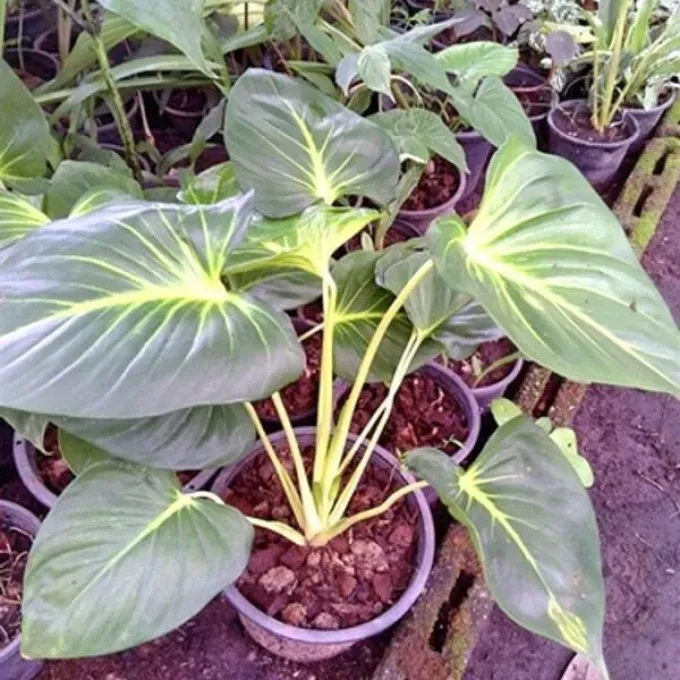
The plant is widely recognized for its heart-shaped leaves with distinct, variegated patterns. It produces a succulent stem and a robust rhizomatous root system, which is characteristic of many members of its botanical family.
Cultivation of this species requires a warm climate with temperatures ideally between 20 and 26 degrees Celsius. Exposure to cold drafts must be strictly avoided, as the plant is highly sensitive to temperature fluctuations.
A well-draining, slightly acidic substrate is crucial for healthy root development. A mixture consisting of peat, pine bark, charcoal, and perlite provides the necessary aeration while retaining sufficient moisture.
Maintenance involves keeping the soil consistently moist but not saturated. Overwatering is the most common mistake, as it prevents the roots from breathing and quickly leads to the decay of the plant's succulent tissues.
Main diseases and pests
The primary pests affecting Homalomena fasciata are spider mites, which thrive in low-humidity indoor environments. Regular misting or the use of a humidifier helps significantly in preventing these infestations.
Root rot is the most serious disease risk, usually triggered by poor drainage or excessive watering. Once the roots are affected, the plant often struggles to recover, making prevention through soil management the priority.
Mealybugs and scale insects may also be found on the petioles. These pests are often introduced via other plants, so quarantine measures for new additions to the collection are highly recommended by agronomists.
Bacterial leaf spot can appear if the foliage remains wet for extended periods in low light. Good air circulation is essential to prevent such pathogens from colonizing the leaf surfaces.
If an infestation occurs, horticultural soaps or specific systemic pesticides should be applied according to the manufacturer’s instructions. Early detection is key to maintaining the plant's decorative appearance.