
Roundleaf mudplantain
Heteranthera rotundifolia
Description
Growing requirements
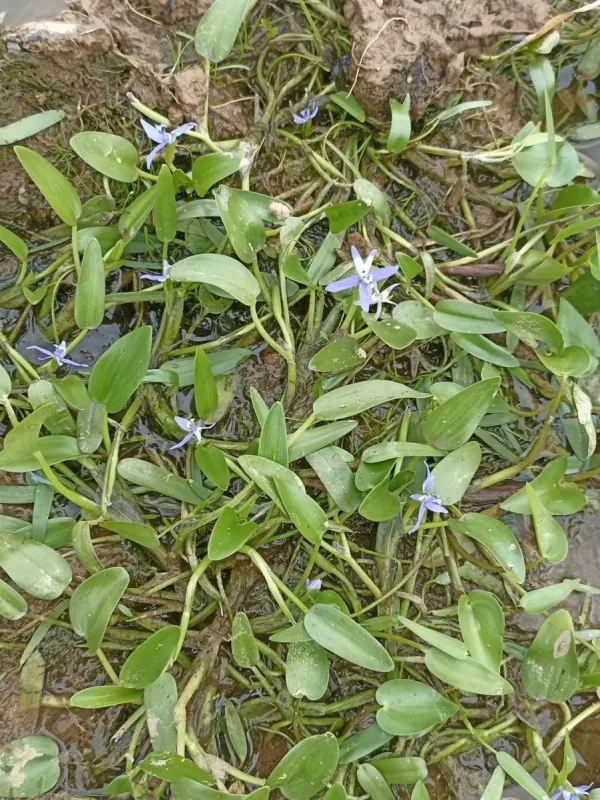
Roundleaf mudplantain (Heteranthera rotundifolia) is an aquatic plant belonging to the Pontederiaceae family. It is native to the tropical and subtropical regions of the Americas, typically thriving in shallow wetlands, marshes, and slow-moving streams.
This species requires a warm climate, with water temperatures ideally ranging between 22 and 28 degrees Celsius. Because of its tropical origin, it is sensitive to cold weather and is commonly grown in controlled environments like ponds or high-end aquaria.
Botanically, it is known for its rounded, smooth leaves and delicate flowers that bloom above the water surface. The plant is anchored in soft sediment or mud, but it efficiently absorbs nutrients from the water column through its submerged stems and leaves.
High light intensity is essential for the healthy development of this plant. In environments with poor lighting, the plant will become leggy, lose its structural integrity, and show stunted growth, making it prone to various physiological issues.
The substrate should be rich in organic matter. While it draws nutrients from the water, a fertile base layer helps establish a strong root system, which is vital for the long-term stability and vigor of the specimen in a landscape or decorative setting.
Main diseases and pests
Snails and other aquatic invertebrates are the primary pests that can feed on the foliage of Heteranthera rotundifolia, leaving unsightly holes and weakening the plant's photosynthetic capacity.
Fungal rot represents a significant threat to the plant if the water circulation is inadequate. Stagnant water promotes the spread of pathogens that cause the stem and leaf tissue to liquefy and decay.
Algal blooms are the greatest competitive threat. Rapidly growing green or brown algae can coat the leaves of the mudplantain, physically blocking light and depriving the plant of the nutrients it needs to survive.
Chlorosis, which presents as yellowing leaves while the veins remain green, is a common deficiency sign, typically indicating an iron or magnesium shortage in the water column.
Maintenance is key to preventing these issues. Regular water changes, pruning of old or damaged leaves, and careful monitoring of water chemistry are essential practices for ensuring the healthy development of this aquatic species.