
Heteranthera limosa
Heteranthera limosa
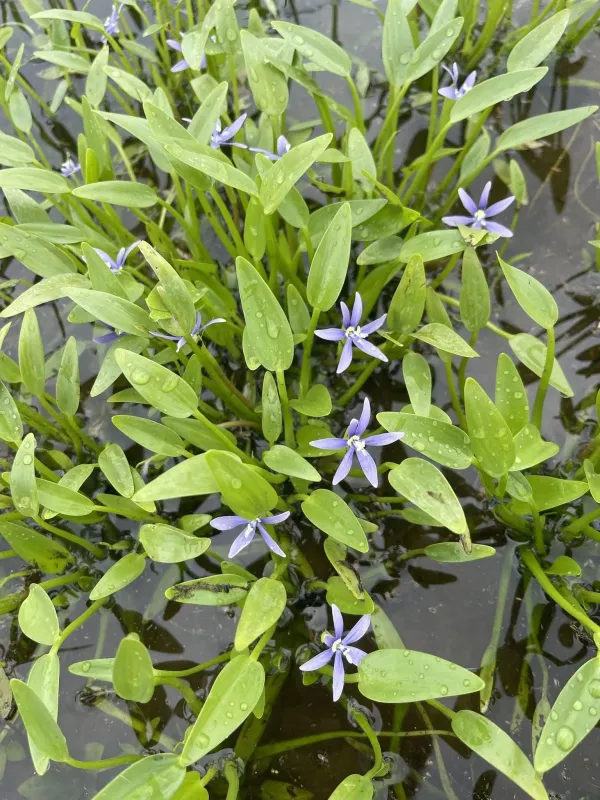
Description
Sowing dates
Heteranthera limosa, commonly known as mud plantain, belongs to the Pontederiaceae family. It is a specialized aquatic or semi-aquatic plant adapted to tropical and subtropical wetlands.
The plant typically reproduces via seeds that require high humidity and warm temperatures to germinate, mimicking the natural conditions of flood-prone areas.
In agricultural settings, sowing involves placing seeds into nutrient-rich, silty substrates that are constantly kept saturated with water, often submerged by a shallow layer.
The growth cycle is highly dependent on photoperiod; a long day cycle ensures rapid biomass production and the formation of characteristic blue or white flowers.
Propagation can also be managed vegetatively in controlled environments by separating healthy plantlets from the parent colony, ensuring they remain in a wet, nutrient-rich medium.
Growing requirements
The species requires a warm climate, with optimal water and air temperatures ranging between 22°C and 30°C. Cold conditions inhibit growth and may induce senescence.
A silty, organic-rich soil substrate is essential. The plant thrives in neutral to slightly acidic pH conditions where nutrients are readily available for root uptake.
Abundant sunlight is a primary requirement. Shade-grown plants tend to be spindly and rarely flower, highlighting the need for unobstructed exposure to light.
Water quality management is vital. Stable water levels are preferred, as the plant is sensitive to sudden changes in saturation levels of the root zone.
Due to its ability to absorb dissolved nitrates and phosphates, it is increasingly studied for use in constructed wetlands for water treatment and environmental restoration.
Main diseases and pests
Invasive algae or faster-growing aquatic weeds often pose the most significant competitive threat, as they can shade out the smaller Heteranthera plants.
Pest pressure from leaf-eating insects can be managed by maintaining water circulation, which prevents the build-up of stagnant conditions favorable to pests.
Fungal pathogens may emerge if the plant is subjected to stagnant water combined with decaying organic matter, leading to crown or root rot.
Agricultural runoff containing herbicides is highly toxic to this species, as its aquatic nature makes it a direct sink for dissolved chemical pollutants.
Maintaining biological balance in the water column is essential to prevent disease outbreaks that typically strike during periods of reduced growth or seasonal stress.