
Clasping heliotrope
Heliotropium amplexicaule Vahl
Description
Growing requirements
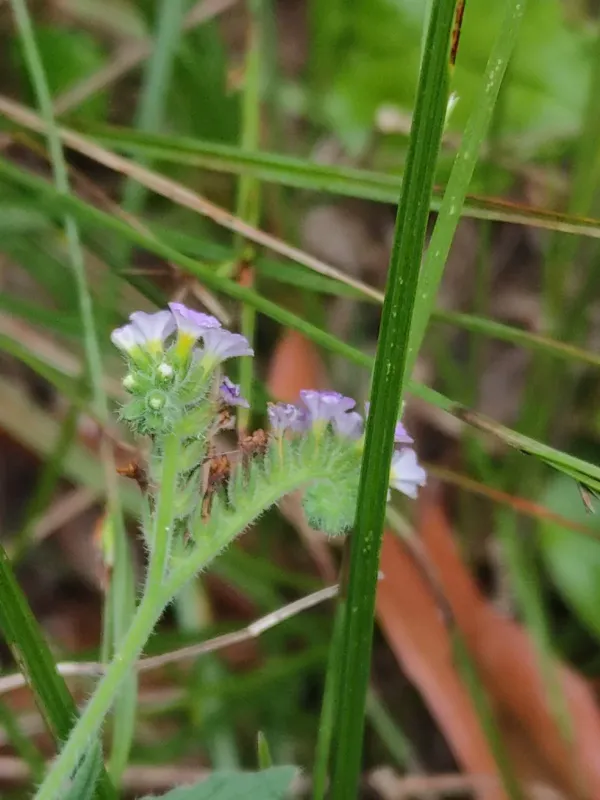
Clasping heliotrope (Heliotropium amplexicaule) is a perennial herbaceous plant belonging to the Boraginaceae family. It is characterized by its distinct sessile leaves that clasp the stem and small, vibrant violet-to-blue flowers arranged in curved spikes.
Native to South America, this species has become a widespread invasive plant in various warm-climate regions globally. In agriculture, it is often classified as a persistent weed that significantly interferes with crop production through its robust competitive nature.
The plant thrives in well-drained, sandy soils and requires ample sunlight for optimal development. It is highly drought-tolerant due to an extensive taproot system, allowing it to survive in environments where other crops might fail due to lack of irrigation.
Effective agricultural management requires integrated strategies. Mechanical weeding is often counterproductive because the plant can regenerate from small fragments of root stock left in the soil after tillage, which complicates traditional eradication efforts.
Agricultural productivity is hampered not only by the plant's competition for nutrients but also by its toxicity. It contains pyrrolizidine alkaloids that can cause severe hepatic damage to livestock if ingested over prolonged periods, making it a liability in grazing areas.
Main diseases and pests
Several insect species serve as herbivores for clasping heliotrope, with some larvae causing significant defoliation. While these insects may seem beneficial for weed control, they rarely prevent the plant from establishing dense, dominant populations in non-managed lands.
Pathogenic fungi can cause foliar diseases such as powdery mildew, especially in high-humidity microclimates. These diseases may reduce the plant's overall vigor but seldom eradicate infestations in favorable growing conditions.
The presence of root-knot nematodes in the vicinity of clasping heliotrope roots is a recognized concern. The plant can act as a reservoir for these soil-borne pests, facilitating their spread to more sensitive commercial crop species in rotation cycles.
Chemical control remains the most frequent intervention in commercial farming. Systemic herbicides are applied during the active growth phase to ensure that the chemical is translocated down into the deep root system to prevent post-treatment regrowth.
Regular field scouting is essential to identify new outbreaks before they become established. By combining chemical suppression with strategic crop rotation, farmers can mitigate the impact of this aggressive plant on total crop yield and animal safety.