
Haplophyllum tuberculatum
Haplophyllum tuberculatum
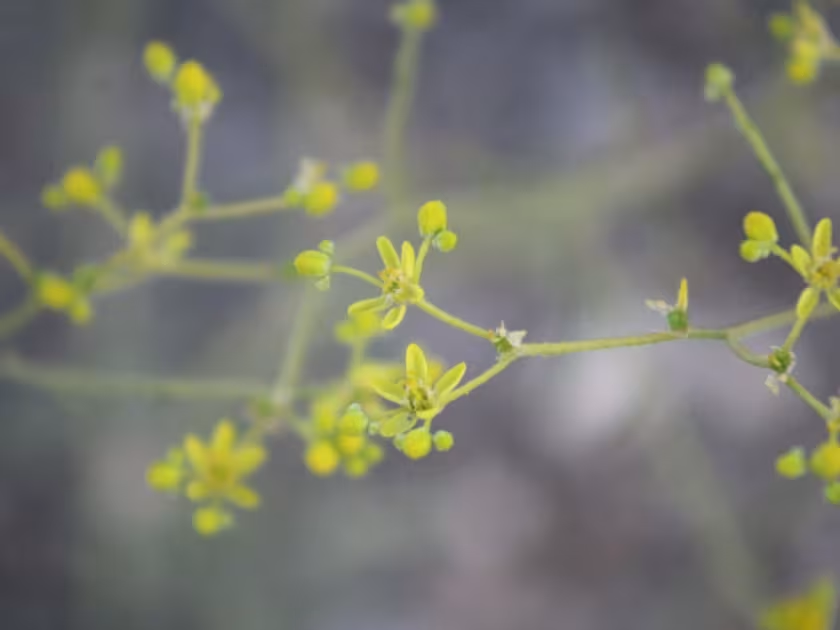
Description
Sowing dates
Haplophyllum tuberculatum is a perennial herbaceous plant adapted to extreme arid conditions. In agricultural settings, sowing is best performed in the autumn or early spring after the seeds have undergone a necessary stratification period to ensure optimal germination rates.
The soil for sowing must be well-drained, preferably sandy or gravelly, with low organic matter content. Seeds should be sown at a shallow depth, as they require adequate light exposure to trigger germination, while maintaining consistent soil moisture during the initial weeks.
Seedlings develop quite slowly, necessitating proactive weed control to prevent competition during the establishment phase. Planting schemes should allow for significant spacing between rows to accommodate the plant's lateral growth habit as it matures.
Optimal planting density should be calculated based on the intended use of the crop, aiming to maximize biomass while preventing overcrowding that could hinder plant health.
As the plant exhibits slow initial growth, long-term land-use planning is essential for establishing sustainable plantations that can persist for multiple years.
Growing requirements
Haplophyllum tuberculatum is a classic xerophyte belonging to the Rutaceae family, perfectly adapted to intense solar radiation. It thrives in high-temperature environments characteristic of desert and semi-desert regions, where heat is a constant factor during the growing season.
The plant is highly sensitive to waterlogged soil conditions and high water tables, which quickly lead to root rot. Stony or rocky substrates with high mineral content are considered ideal for maintaining plant vigor and structural integrity.
In its native habitat across the Middle East and North Africa, the species withstands significant diurnal temperature fluctuations. Agricultural practices should minimize fertilizer use, as excessive nitrogen can negatively influence the biosynthesis of secondary metabolites.
The crop requires minimal rainfall, and irrigation should only be applied during critical growth stages. Effective soil aeration is vital to prevent the establishment of harmful pathogens in the root zone.
Its high tolerance to soil salinity makes it a potentially valuable candidate for the reclamation of degraded or marginal lands in arid climates.
Yield
The primary economic value of the crop lies in the biomass of its aerial parts, which contain a complex profile of alkaloids and essential oils. The total yield is directly dependent on specific climatic conditions and the number of clear, sunny days during the season.
Under commercial conditions, raw material yields are moderate, reflecting the nature of a semi-domesticated species. Harvesting requires either specialized manual labor or machinery capable of operating on uneven, stony terrains.
Yields of biologically active compounds are often higher when the plant is subjected to natural environmental stress, which encourages the production of phytochemicals. Research suggests that controlled stress may be used to enhance quality metrics.
Commercial yields stabilize by the third year, when the plant reaches full biological maturity. Subsequent harvests can be performed annually, provided the root system remains undisturbed and healthy.
Economic viability is largely determined by the demand from the pharmaceutical sector, which seeks specific plant-derived compounds for specialized medical applications.
Main diseases and pests
The most significant threat to Haplophyllum tuberculatum is fungal infection triggered by poor drainage or excessive humidity. Root rot is particularly insidious, as it progresses rapidly and is often irreversible once symptoms become visible on the foliage.
Pests common to the Rutaceae family, such as specific aphid species or mites, may infest young shoots and inflorescences. Consistent monitoring is necessary to prevent widespread infestations that could diminish crop quality.
Weeds are formidable competitors during the early stages of vegetation, depriving the crop of essential nutrients and sunlight. The use of herbicides is generally avoided to preserve the medicinal purity of the final product.
High humidity combined with lower temperatures can lead to bacterial leaf spots. Preventative measures should focus on maintaining adequate spacing and proper airflow throughout the plantation.
- Root rot caused by waterlogged soil
- Aphids infesting tender foliage
- Powdery mildew in poorly ventilated areas
- Nematodes in degraded or exhausted soil
- Invasive weed encroachment
Harvesting
Harvesting should be conducted during the peak flowering stage, when the concentration of bioactive secondary metabolites in the aerial parts is at its absolute maximum. During this period, the plant's chemical profile is most stable.
Stems should be cut using sharp, clean tools, ensuring that the crown of the root is not damaged to allow for healthy regrowth in subsequent cycles. Collected material must be moved immediately to a clean, ventilated drying area.
The raw material should be dried in the shade with natural airflow, as direct sunlight can degrade sensitive essential oils and chemical compounds. Proper drying is crucial to prevent molding and decomposition.
Once dried, the product undergoes purification to remove foreign matter and debris. Final storage must be in airtight, moisture-proof containers to preserve the integrity of the bioactive components.
Meticulous harvest management is a critical factor in ensuring that the final output meets the strict quality standards required by industrial processors.