
Creeping baby's breath
Gypsophila repens L.
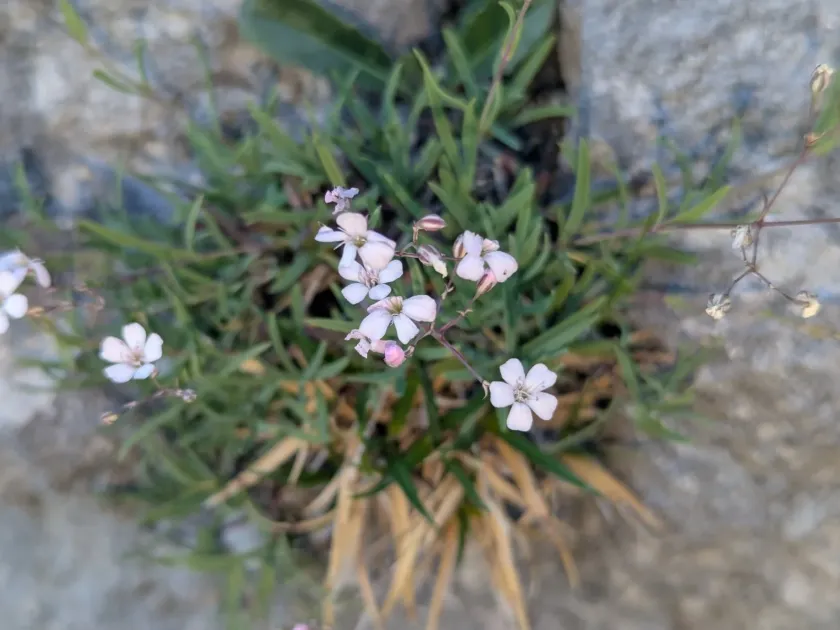
Description
Sowing dates
Propagation of Gypsophila repens is typically achieved via seeds sown in spring, either directly into the field or in seed trays for transplanting later. The seeds should be sown in a well-aerated, light substrate at a shallow depth.
When starting indoors, seeds are usually sown in March. Consistent but moderate soil moisture is required until germination. Once seedlings develop a few true leaves, they should be pricked out and transferred into individual pots to avoid overcrowding.
Transplanting to a permanent location is best performed once the danger of frost has passed in late spring. Spacing should be approximately 30 to 40 cm apart to ensure adequate air circulation and to prevent the development of foliage diseases.
Vegetative propagation via cuttings is another reliable method, particularly for preserving specific color forms. Cuttings are taken in early summer and rooted in a sand-based medium within a greenhouse or under a cold frame.
During the early stages of establishment, young plants require supplemental irrigation to ensure the root system penetrates the soil adequately. Once the plant has established its deep taproot, it becomes significantly more resistant to moisture deficits.
Growing requirements
Creeping baby's breath (Gypsophila repens L.) is a perennial herbaceous plant belonging to the Caryophyllaceae family. Naturally originating from the mountain ranges of Europe, it is well-adapted to rocky, sparse soils and elevated environments.
The plant thrives in well-drained, sandy, or rocky soil with a neutral to slightly alkaline pH. It is highly intolerant of waterlogged soil, which leads to root decay. Therefore, creating a proper drainage system is essential for cultivation on heavier soils.
This species is highly photophilous, requiring full sun exposure to maintain its compact, cushion-like habit. In shady conditions, the stems become leggy, and the profusion of the characteristic white or pink flowers is significantly reduced.
Gypsophila repens is known for its excellent cold tolerance and its ability to withstand drought once established. It does not require high levels of nutrition, making it suitable for poor, stony soils where many other garden plants would struggle.
Its primary agricultural and horticultural application is in landscape design as a decorative groundcover. It is extensively used in rock gardens, on dry stone walls, and as a border plant to provide a soft, carpet-like appearance during the flowering season.
Main diseases and pests
The primary threats to the health of creeping baby's breath are fungal infections caused by high humidity and poor airflow. Diseases such as root rot, gray mold (Botrytis), and rust can be particularly damaging to dense mats of foliage.
To prevent disease outbreaks, it is crucial to avoid overhead irrigation and ensure the plants are not crowded. Removing weeds and dead plant material from around the base of the plant helps maintain airflow and reduces the risk of fungal proliferation.
In terms of pests, the plant may occasionally be attacked by nematodes or leaf-feeding caterpillars. If these pests are detected, targeted application of appropriate pesticides is recommended to protect the vigor of the plant.
- Regular monitoring of foliage for signs of chlorosis or spotting.
- Sanitary pruning of dead stems immediately after the flowering period.
- Application of copper-based fungicides as a preventative measure in wet seasons.
Overall, maintaining healthy plants is easily achieved by strictly adhering to the requirements for high drainage and full sunlight. Avoiding excessive organic fertilizers and moisture ensures the plant remains compact and disease-free.