
Gymnocalycium schroederianum
Gymnocalycium schroederianum
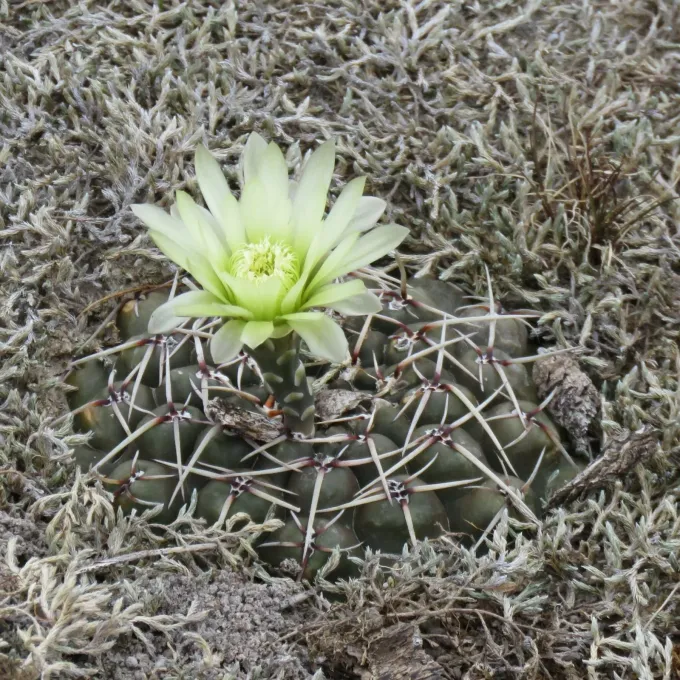
Description
Growing requirements
Gymnocalycium schroederianum belongs to the Cactaceae family, native to the grasslands and rocky terrains of Uruguay. It is a slow-growing succulent characterized by its distinctive flattened globular stem and prominent ribs.
The plant thrives in bright, indirect light conditions. While it is accustomed to sunlight, direct exposure during the peak of summer requires partial shading to prevent sunburn on the plant epidermis.
A well-draining soil mix is mandatory for successful cultivation. Growers often use a combination of mineral-based substrates, such as pumice or coarse sand mixed with a small amount of organic peat to maintain acidity.
During the growing season, consistent but moderate watering is necessary once the substrate has completely dried out. Water should be applied directly to the soil, avoiding contact with the main stem to prevent rotting.
The plant is used exclusively for ornamental purposes, specifically in xeriscaping or as a prized specimen in succulent collections. Its ability to produce beautiful flowers makes it highly desirable for amateur horticulturists.
Main diseases and pests
Root rot remains the primary threat to the vitality of Gymnocalycium schroederianum, usually caused by stagnant water in the root zone. Poor drainage exacerbates this risk significantly during dormant months.
Mealybugs are common pests that target the areoles and ribs of the cactus. These insects extract sap and can cause significant damage if left untreated for extended periods.
Spider mites can also infest the plant, particularly in dry and poorly ventilated environments. They cause discoloration of the skin and create fine webs that hinder the plant's natural respiration.
Preventative measures include maintaining proper air circulation and inspecting the plant periodically. Ensuring the substrate is completely dry before re-watering is the most effective preventative strategy.
Should pests appear, specialized systemic insecticides or horticultural oils are recommended to mitigate the infestation without damaging the sensitive tissue of the cactus.