
Gymnocalycium schickendantzii
Gymnocalycium schickendantzii
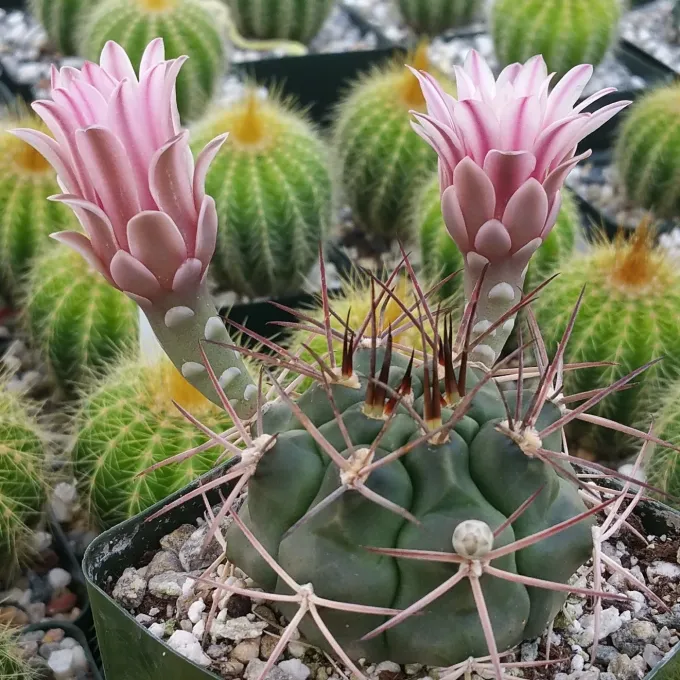
Description
Sowing dates
Propagation of Gymnocalycium schickendantzii via seeds is best performed in the spring, from March to May, when increasing daylight hours stimulate germination and early growth.
Seeds should be sown in a sterilized, sandy, and well-draining substrate, maintaining a consistent temperature between 22 and 25 degrees Celsius for optimal results.
High humidity is essential during the initial germination phase; therefore, containers should be covered to prevent rapid evaporation of moisture from the top soil layer.
Once seedlings emerge, they must be gradually acclimatized to lower humidity levels to prevent fungal infections and encourage the development of strong, drought-resistant tissues.
Pricking out the seedlings into individual pots is recommended once the young cacti have established a robust root system and demonstrate visible characteristic spines.
Growing requirements
Gymnocalycium schickendantzii is a member of the Cactaceae family, native to the arid and rocky landscapes of Argentina, which defines its preference for mineral-rich soil.
The species thrives in bright, indirect light; intense midday sun can cause epidermis bleaching, so protective measures should be taken during peak summer months.
Watering practices should follow the soak-and-dry method, ensuring the soil is completely dry before adding more water to prevent root rot in the sensitive root system.
A dormant period during winter is vital, requiring temperatures to drop to around 10–12 degrees Celsius with minimal to no water to ensure future blooming cycles.
The ideal potting mix includes a combination of coarse sand, perlite, and a small portion of loam, ensuring excellent drainage properties for long-term health.
Main diseases and pests
The most common threat to this cactus is root rot, typically caused by overwatering or the use of heavy, non-porous soil that retains excessive moisture for too long.
Mealybugs are frequent pests that nest in the areoles, extracting sap and weakening the plant, which often leads to stunted growth and secondary infections.
Spider mites can become problematic if the ambient air is too dry, causing scarring on the cactus surface that permanently diminishes the aesthetic value of the specimen.
Integrated pest management, including the use of appropriate insecticides and environmental adjustments like improved airflow, is crucial for maintaining a healthy collection.
Preventive maintenance involves routine inspections for signs of decay, avoiding excess fertilizer, and maintaining a clean, well-ventilated growing area for the plants.