
Gymnocalycium ritterianum
Gymnocalycium ritterianum
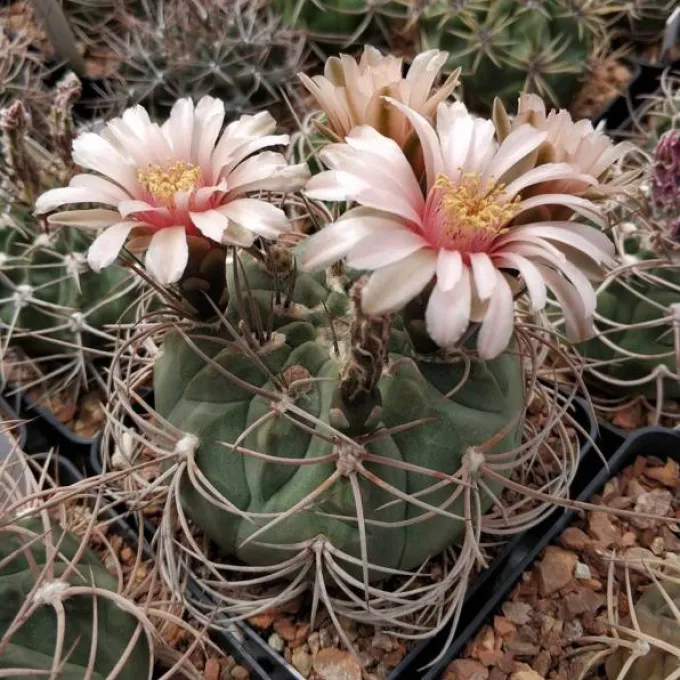
Description
Sowing dates
Sowing Gymnocalycium ritterianum seeds is most successful during the spring season, as rising temperatures and increasing sunlight provide ideal conditions for germination.
The seeds should be placed on the surface of a sterile, well-draining substrate and lightly covered with fine grit to maintain stability without preventing light penetration.
Maintaining a temperature range of 20°C to 25°C is critical, along with keeping the humidity high within a closed propagator or covered container during the initial phase.
Once seedlings emerge and start developing their first spines, the cover should be removed gradually to acclimatize the young plants to standard ambient conditions.
Young Gymnocalycium plants require careful management of soil moisture; while they need more water than adults, any excess saturation must be avoided to prevent damping-off.
Growing requirements
Gymnocalycium ritterianum belongs to the Cactaceae family, native to the arid and rocky landscapes of Argentina, where it has adapted to harsh climatic variations.
The plant thrives in bright, filtered light and requires a growing medium with excellent drainage, typically composed of mineral-rich gravel, sand, and a small amount of peat.
Watering should be conducted sparingly during the growth season, ensuring the soil is completely dry before adding any moisture to protect the sensitive root structure.
During the winter dormancy period, the cactus requires a dry, cool environment, with temperatures around 10°C, which is essential for triggering the next flowering cycle.
Adequate air circulation around the plant is vital to mimic the natural ventilation of its native habitat and to reduce the risk of physiological stress and infections.
Main diseases and pests
Root rot is the most frequent cause of plant mortality, usually resulting from poor drainage or overwatering, especially when temperatures are too low for active evaporation.
Mealybugs are common pests that tend to hide in the deep, narrow folds of the cactus ribs, feeding on plant sap and weakening the overall health of the succulent.
Spider mites are another significant threat, particularly in warm, dry climates, as they damage the epidermis, leading to unsightly scars and reduced plant vigor.
Preventative measures include regular visual inspections, maintaining a strictly dry winter cycle, and ensuring that no debris accumulates around the base of the plant.
If an infestation occurs, it is recommended to apply targeted horticultural oils or systemic insecticides while isolating the affected cactus from the rest of the collection.