
Gymnocalycium ragonesei
Gymnocalycium ragonesei
Description
Sowing dates
Sowing Gymnocalycium ragonesei seeds is best conducted in early spring, which allows the seedlings to benefit from increasing daylight hours for vigorous growth.
The substrate for sowing must be fine-textured, sterile, and highly inorganic, typically composed of sand and perlite to provide optimal aeration and drainage.
Maintain a constant temperature between 22 and 25 degrees Celsius to ensure the highest germination rate and to promote uniform development of the seedlings.
Covering the containers with transparent lids or plastic wraps is essential to maintain high humidity levels during the initial phase of the seed germination process.
Gradual acclimatization to drier air should begin as soon as the first spines appear, ensuring the young plants adapt slowly to the standard growing environment.
Growing requirements
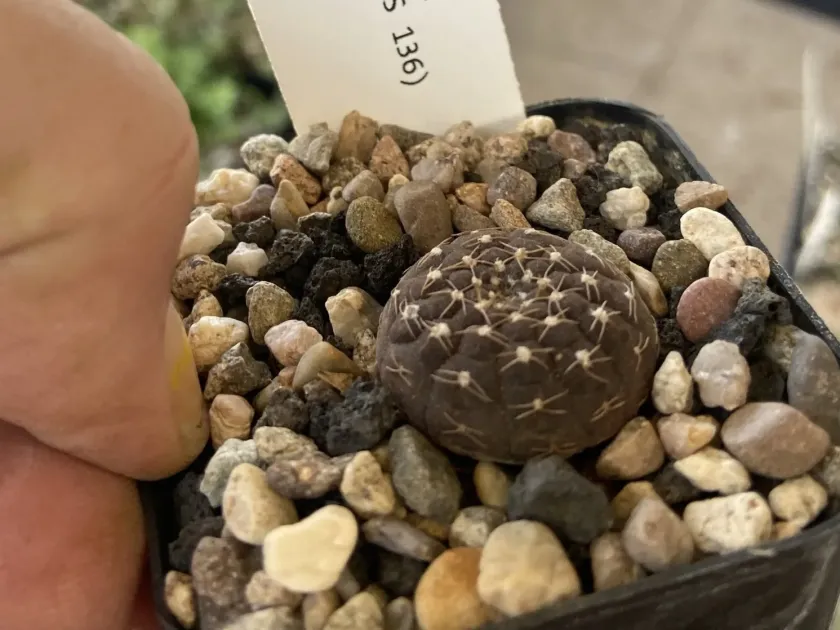
Gymnocalycium ragonesei is a distinctive member of the Cactaceae family, known for its flat, dark, almost black-green appearance and natural origin in Argentina.
This species requires very bright, indirect light; direct summer midday sun can be harmful, causing sunburn on the sensitive epidermis of the plant.
A well-draining, mineral-based soil mix is required to prevent water stagnation, which is the primary cause of root issues for this specific cactus.
During the active growth season, water should be applied moderately, and it is strictly necessary to allow the soil to dry out completely between successive waterings.
A cool, dry winter dormancy period, with temperatures ranging from 5 to 10 degrees Celsius, is mandatory to stimulate flowering and maintain plant vigor.
Main diseases and pests
The most dangerous threats to this species are fungal and bacterial infections triggered by excessive moisture and poor air circulation around the root zone.
Mealybugs are common pests that tend to hide in the crevices of the flattened stem, requiring prompt treatment with contact or systemic insecticides.
Spider mites can also cause significant aesthetic damage, especially in hot and very dry climates, by feeding on the sap and scarring the cactus surface.
Preventive maintenance involves regular inspections of the plant's surface and the use of sterile tools when performing any necessary repotting procedures.
- Maintain a dry soil regime during winter.
- Ensure excellent airflow for the plants.
- Apply preventative fungicide treatments annually.
- Keep the potting mix clean and sterile.
- Monitor closely for pest infestations.