
Gymnocalycium quehlianum
Gymnocalycium quehlianum
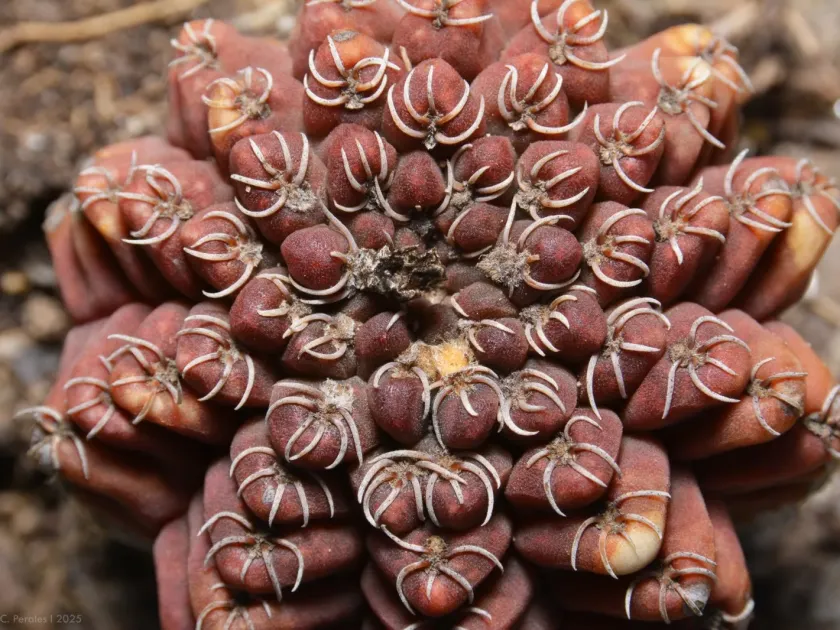
Description
Sowing dates
Propagation of Gymnocalycium quehlianum is primarily achieved through seeds, which should be sown during the spring season when temperatures are warm.
A fine, well-draining seed-starting mix is essential, usually consisting of equal parts sterile potting soil, grit, and perlite to prevent root rot.
Maintain a constant temperature of 22 to 25 degrees Celsius, as this is critical for the germination of Gymnocalycium species seeds.
Covering the seed tray with a clear plastic lid helps to retain the necessary humidity, but it is important to provide ventilation to avoid fungal issues.
Seedlings should be left undisturbed for several months, only transplanting them into individual small pots once they are large enough to handle safely.
Growing requirements
Gymnocalycium quehlianum belongs to the Cactaceae family and is native to the rocky landscapes of Cordoba, Argentina, where it thrives in mineral-rich soil.
The species requires bright, indirect sunlight; intense direct sun in summer can cause the skin of the cactus to bleach or sustain physical burns.
The soil substrate must be gritty and mineral-based, avoiding rich organic composts that can hold excessive moisture and lead to rot.
During the growing season, water should be applied only when the potting mix has dried out completely, following the soak-and-dry method.
A cool, dry winter dormancy period is essential to trigger the plant's flowering mechanism, which produces beautiful white to pale pink blossoms.
Main diseases and pests
The most significant threat to this cactus is root rot, resulting from stagnant water in the soil or pots that lack adequate drainage holes.
Mealybugs are common pests that hide within the deep ribs and crevices of the cactus, making them difficult to spot until an infestation is established.
Spider mites can occasionally affect the plant in overly dry environments, leading to unsightly brown patches on the surface of the green stem.
Effective pest management involves using mild insecticidal soap or specific systemic pesticides, ensuring thorough coverage of all stem surfaces.
Preventative care, including regular inspection and maintaining good airflow around the cactus, significantly reduces the likelihood of severe pest or disease outbreaks.