
Gymnocalycium hybopleurum
Gymnocalycium hybopleurum
Description
Sowing dates
Gymnocalycium hybopleurum is propagated primarily by seeds during the spring season, from March to May. The optimal temperature for seed germination should be maintained between 22 and 25 degrees Celsius.
Seeds are sown in a loose, sterile substrate consisting of a mixture of peat and coarse sand. It is essential to maintain stable air humidity using a glass cover or plastic wrap until the first seedlings appear.
Seedlings of this cactus require moderate light, avoiding direct sunlight which can cause burns. Pricking out is performed after the first pair of true spines appears.
The plant grows quite slowly, so full development to a decorative state takes between one and two years. It is important to monitor the quality of irrigation water, which should be soft and settled.
Vegetative propagation via offsets is possible if the plant produces side shoots, although this is less characteristic for Gymnocalycium hybopleurum compared to other species in the genus.
Growing requirements
This crop belongs to the Cactaceae family and is a typical representative of the steppe and foothill regions of South America, particularly Argentina. The plant prefers well-drained, mineral soils with a low organic content.
For successful growth, bright diffused lighting is necessary, although the cactus needs shading during the summer midday. In conditions of insufficient light, the stem becomes elongated, losing its natural flattened shape and vibrant epidermal color.
Watering should be regular during the active growth period, with mandatory drying of the soil ball between waterings. In winter, the plant requires dry conditions at lower temperatures between 8 and 12 degrees Celsius.
Substrate requirements include the addition of brick crumbs, gravel, or perlite to ensure excellent air and moisture exchange at the roots. Gymnocalyciums are sensitive to waterlogging, which quickly leads to root rot.
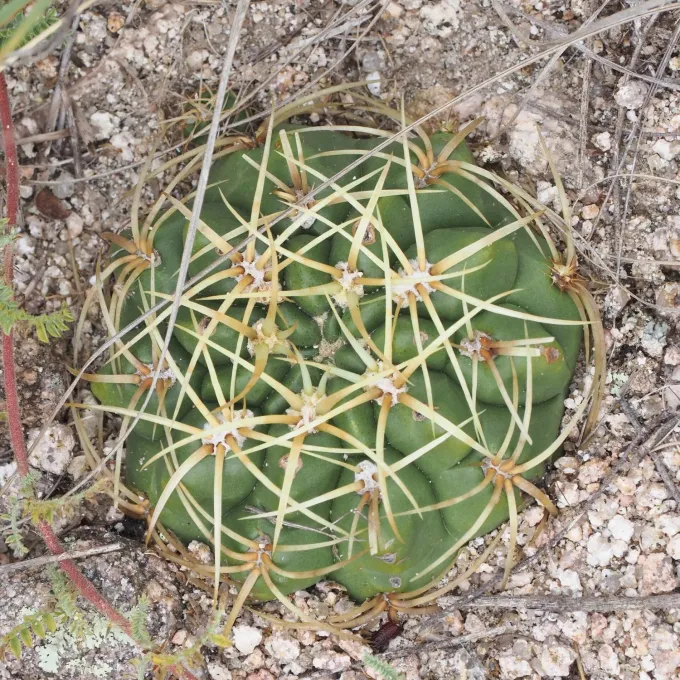
The plant has a distinct ribbed stem structure typical of the species and remains small, making it a popular subject for collector-grade indoor plant cultivation.
Main diseases and pests
The main pest for this crop is the spider mite, which actively multiplies in dry, hot indoor air. Infestations appear as light spots on the stem, and the skin may develop a grayish or brownish hue.
Under conditions of soil overwatering or low air temperatures, the plant is prone to root and stem rot. Fungal infections develop rapidly, so prevention involves controlling irrigation and using fungicides.
Mealybugs can also infest the cactus, nesting in the folds between ribs. They can be detected by the characteristic white cotton-like substance, which requires immediate mechanical removal or insecticide treatment.
Root mealybugs pose a specific danger because their activity often remains unnoticed until the plant begins to wilt. Annual repotting with root inspection for pests is highly recommended.
Failure to maintain the correct temperature regime during winter can cause physiological weakening of the plant's immunity, making it more vulnerable to any pathogens present in the substrate.