
Gymnocalycium erolesii
Gymnocalycium erolesii
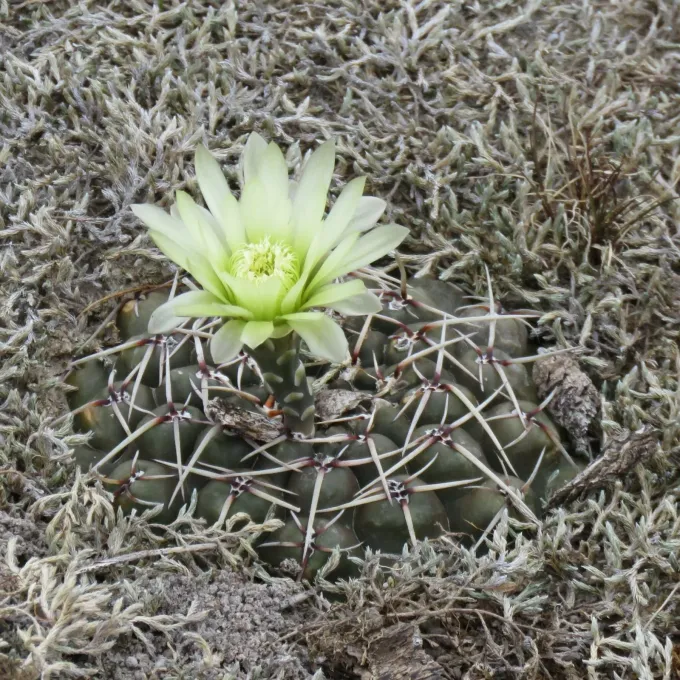
Description
Growing requirements
Gymnocalycium erolesii is a species of succulent belonging to the Cactaceae family, native to the arid landscapes of South America. It is recognized for its unique globular shape and is highly sought after by succulent enthusiasts globally.
In terms of cultivation, this species thrives in well-lit environments but requires protection from intense midday sun, which can cause severe dehydration and scarring. Proper light management is crucial for maintaining the plant's natural compact form.
The soil requirements are strict: the substrate must be highly mineral, inorganic, and fast-draining to prevent root asphyxiation. A typical mix includes pumice, coarse sand, and a minimal amount of organic substrate such as peat.
Watering practices must be strictly controlled according to the season. During the active growing phase, water should only be applied when the substrate is completely dry to the touch to mimic the erratic rainfall of its natural habitat.
From an agricultural and commercial standpoint, this plant is cultivated as a boutique crop. It is produced in specialized nurseries for sale to private collectors and botanical institutions, rather than for food or fiber production.
Main diseases and pests
The primary threats to the health of Gymnocalycium erolesii include root and collar rot caused by over-irrigation. These fungal pathogens propagate rapidly in water-logged soils, leading to total plant collapse.
Pests such as mealybugs represent a persistent challenge for growers. These insects hide in the crevices of the stem, feeding on plant sap and weakening the overall vigor of the cactus.
Spider mites are another major concern, especially in greenhouse conditions with poor air circulation. Infestations lead to discoloration of the epidermis and, if left untreated, can result in stunted growth.
Effective management involves a combination of cultural practices, such as maintaining proper ventilation, and chemical control using systemic insecticides or acaricides during the early stages of infestation.
Routine inspection of the root zone and stems is mandatory for early detection of issues. Isolating newly acquired specimens is a recommended practice to prevent the spread of hidden pests or infections.