
Gymnocalycium castellanosii
Gymnocalycium castellanosii
Description
Sowing dates
Gymnocalycium castellanosii is a distinct member of the Cactaceae family, known for its spherical, rib-heavy structure. Propagation is primarily achieved through seeds, which are sown in early spring to take advantage of the warming temperatures needed for germination.
The seeds require a porous, well-draining soil mix consisting of sand and fine peat. To ensure successful germination, the soil surface should be kept consistently moist under a transparent cover, mimicking a greenhouse environment until the seedlings establish.
Patience is essential during the early development of these cacti, as they grow slowly. Once the seedlings reach a certain size, they are carefully pricked out and transferred to individual small pots to allow for further root development.
Vegetative propagation is also possible through offsets, which occasionally grow at the base of the main plant. These offsets should be removed with a sterile blade and allowed to air-dry for several days to form a callus before planting.
Proper propagation environment must provide high levels of ambient light, but direct burning sun should be avoided during the initial rooting phase to protect the fragile young tissues of the plant.
Growing requirements
Native to the arid landscapes of Argentina, this species thrives in environments that mimic its natural stony habitat. It requires a bright, sunny location to maintain its compact shape, though light shading is beneficial during the extreme summer heat to prevent epidermis damage.
The ideal potting medium for this cactus is a specialized mineral-heavy substrate. It should be composed of coarse sand, perlite, and a small amount of leaf mold to ensure that water drains rapidly, preventing stagnation around the root crown.
Temperature control is vital for its cycle: it prefers warm temperatures between 22 and 28 degrees Celsius during the growing season. In winter, the plant enters dormancy and requires cool temperatures around 10 degrees Celsius to prepare for the spring bloom.
Watering should be performed only when the soil has completely dried out. In the winter months, the plant should remain almost entirely dry to avoid rot, which is the most frequent issue encountered by collectors of this species.
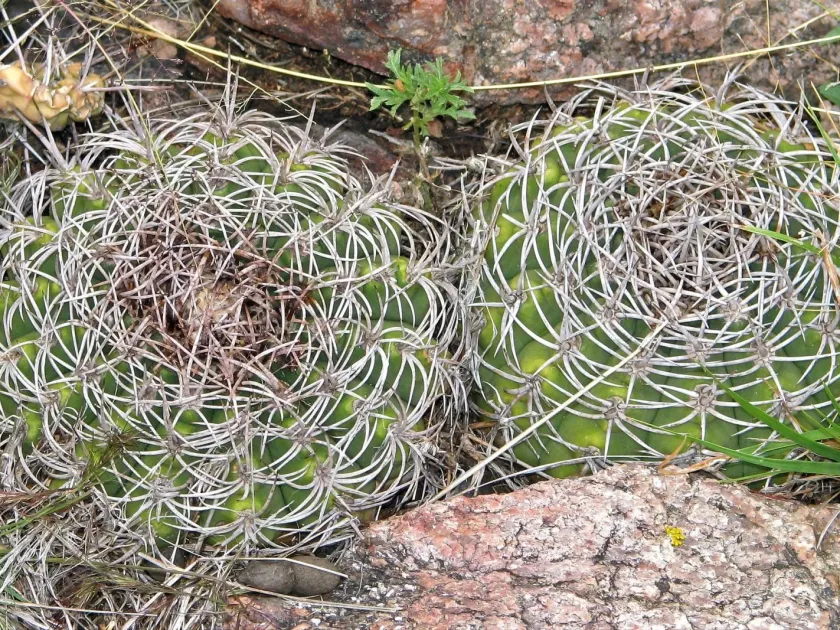
Botanically, Gymnocalycium castellanosii displays a greyish-green body with sharp, curved spines. These features allow the plant to store water effectively, making it highly resilient in its natural desert ecosystem.
Main diseases and pests
The most significant threat to the health of Gymnocalycium castellanosii is excessive moisture. If the soil remains saturated for too long, the root system will quickly succumb to fungal decay, often becoming visible only after the stem begins to soften.
Pests such as red spider mites and mealybugs are the primary threats. These insects feed on the plant's sap, leaving behind unsightly discolouration and weakening the cactus, making it susceptible to secondary infections.
Control of these pests involves the use of appropriate acaricides and systemic insecticides. Regular inspection of the crown and the areas between the ribs is crucial for the early detection and management of pest infestations.
Preventive care is the most effective strategy against disease. This includes ensuring proper airflow around the plant, avoiding overhead watering, and strictly adhering to the dry winter dormant period.
- Strict avoidance of winter watering
- Using mineral-based substrates for improved drainage
- Routine checks for signs of infestation