
Euryops pectinatus
Euryops pectinatus (L.) Cass.
Description
Growing requirements
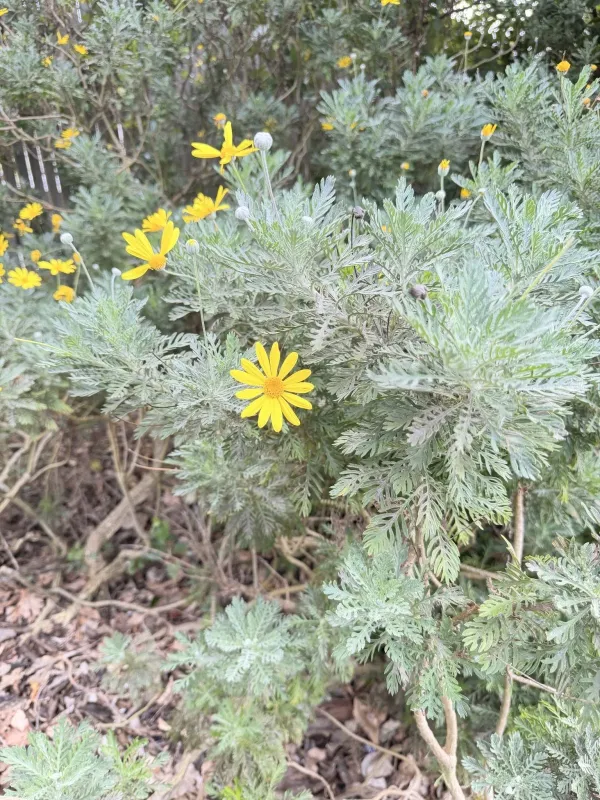
Euryops pectinatus, commonly known as the grey-leaved euryops, is a robust evergreen shrub belonging to the Asteraceae family. Native to South Africa, it is widely appreciated for its golden-yellow, daisy-like flowers and its finely divided, silvery-green foliage.
Botanically, this shrub grows in a dense, bushy habit, typically reaching a height of 1 to 1.5 meters. The leaves are distinctive, featuring deep, comb-like lobes covered in fine hairs, which not only serve a decorative purpose but also help the plant retain moisture.
The plant thrives in full sun and requires high levels of solar exposure to maintain its compact shape and intense bloom. In temperate climates, it is often grown as a patio plant or in containers, as it is frost-sensitive and performs best in mild, Mediterranean-like conditions.
Soil requirements focus on excellent drainage; waterlogged roots are the primary cause of plant failure. A mixture consisting of potting compost, perlite, and coarse sand provides the ideal environment for healthy root development and prevents fungal infections.
Cultivation practices include moderate watering and regular fertilization during the active growing season. Pruning is essential; shearing the plant back after the blooming cycle finishes encourages bushy growth and prepares the specimen for the next flowering season.
Main diseases and pests
Spider mites are a significant threat to Euryops pectinatus, particularly in hot, arid conditions. These pests thrive in dry air, so maintaining a proper microclimate and occasionally misting the leaves can serve as an effective preventative measure against infestation.
Aphids often target new, tender shoots and developing flower buds during the spring. Early detection is key; manual removal or the application of insecticidal soap is usually sufficient to manage minor populations without needing harsh chemicals.
Root rot, primarily caused by Phytophthora species, remains the most critical disease threat. This usually stems from poor drainage or excessive watering, highlighting the importance of using containers with adequate drainage holes and lightweight soil media.
Powdery mildew may manifest as a white, dusty layer on the leaves if the plant is kept in an area with stagnant air. Increasing circulation around the plant is the best method to reduce the humidity levels that favor fungal spore germination.
Regular monitoring of the foliage and stem bases ensures that any health issues are addressed promptly. Implementing an Integrated Pest Management (IPM) approach helps keep the plant vigorous while minimizing the need for extensive chemical interventions.