
Euryops virgineus
Euryops virgineus (L. f.) DC.
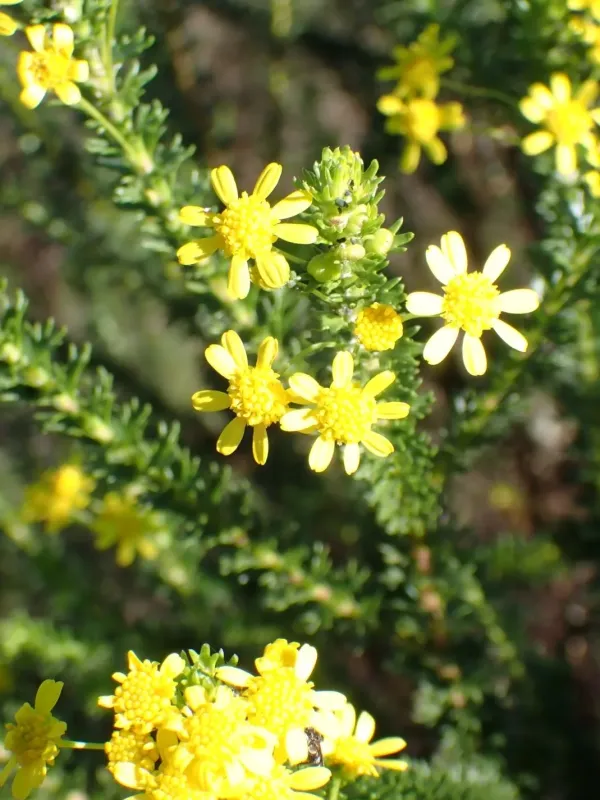
Description
Growing requirements
Euryops virgineus is an evergreen shrub species belonging to the Asteraceae family. Native to the Cape region of South Africa, this plant thrives in environments characterized by distinct seasonality and well-drained soil profiles.
The cultivation of this species requires full sun exposure to ensure vigorous growth and maximal flower production. It is highly intolerant of waterlogged soil conditions, which frequently cause root rot and rapid decline of the plant structure.
Ideal soil for Euryops virgineus should be sandy or loamy with excellent drainage capacity and a slightly acidic to neutral pH. Providing a well-aerated growing medium is the most critical step in successful nursery and garden management.
The agricultural maintenance includes precise irrigation management, focusing on watering only when the top layer of soil has dried out. Annual pruning is recommended immediately after the flowering season to prevent the plant from becoming leggy and to promote dense, compact growth.
In terms of usage, Euryops virgineus is prized in ornamental horticulture for its early and prolific display of bright yellow daisy-like flowers. It is an excellent choice for xeriscaping or container gardening in temperate or Mediterranean climates.
Main diseases and pests
The primary physiological threat to Euryops virgineus is the development of root system pathogens caused by excess moisture. Proper drainage installation is essential to mitigate these risks in clay-heavy soil environments.
Pest problems typically involve infestation by aphids and spider mites, especially in greenhouse conditions or during periods of low humidity. Integrated pest management practices, including the use of neem oil or targeted insecticides, are recommended.
Fungal leaf spot diseases may appear if the plant is grown in areas with poor airflow and high humidity. Ensuring adequate spacing between plants significantly reduces the incidence of these foliar issues.
Nutrient deficiency, particularly iron or magnesium, can cause chlorosis if the soil pH becomes too alkaline. Periodic soil testing is advised to ensure optimal nutrient availability for sustained plant health.
Over-fertilization represents a risk as it stimulates succulent growth that attracts pests and makes the plant susceptible to environmental stress. Use controlled-release fertilizers sparingly to support the natural metabolic rate of the shrub.