
Euryops speciosissimus
Euryops speciosissimus DC.
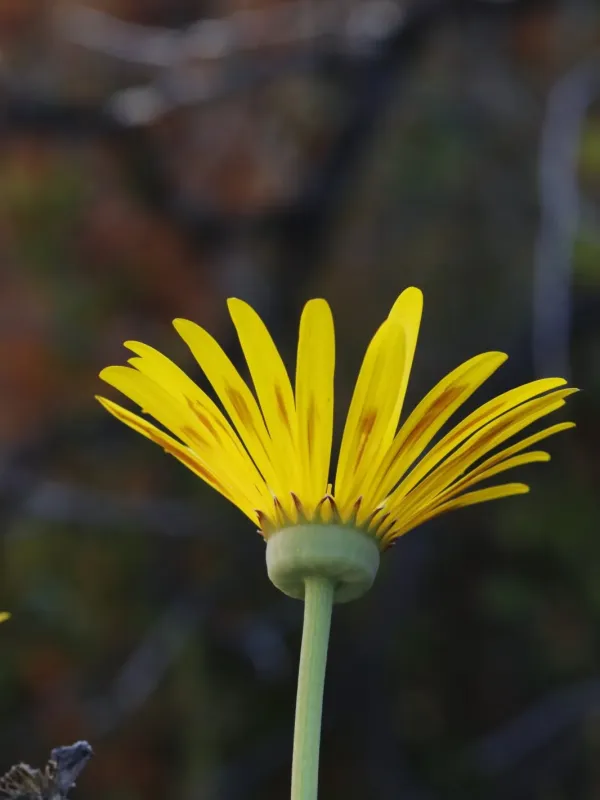
Description
Growing requirements
Euryops speciosissimus, commonly known as the Clanwilliam Euryops, is a perennial evergreen shrub belonging to the Asteraceae family. This ornamental species is highly prized for its vibrant yellow flower heads and grey-green, deeply divided foliage.
Originating from the Western Cape in South Africa, this plant thrives in Mediterranean-type climates. It is adapted to rocky, well-draining soils and requires a sunny position to produce its signature profusion of blossoms throughout the flowering season.
When cultivating this species, site selection is critical. The soil must be poor to moderately fertile, sandy or loamy, and perfectly drained. The plant is drought-tolerant once established but requires consistent moisture during its initial growth phase and during prolonged dry spells.
The plant demonstrates low frost tolerance, making it unsuitable for regions with harsh winter freezes. In cooler climates, it must be grown in containers that can be moved to a protected, frost-free location during the winter months.
Agrotechnical management involves regular pruning to prevent the shrub from becoming woody and leggy. Cutting back the stems after the flowering cycle encourages denser branching and improves the overall structural integrity of the plant for the following season.
Main diseases and pests
Like many plants in the Asteraceae family, Euryops speciosissimus is susceptible to various pests, most notably aphids and spider mites. These pests typically congregate on the undersides of leaves, draining sap and leaving the plant prone to secondary infections.
Fungal issues such as powdery mildew may develop if the plant is kept in conditions with high relative humidity and poor air circulation. This appears as a powdery white substance on the foliage, which can eventually cause leaf drop and stunted development.
Control strategies should focus on integrated pest management (IPM). Using horticultural oils or insecticidal soaps can be effective against soft-bodied pests without causing significant damage to the plant or the surrounding ecosystem.
Soil-borne root rot, caused by species like Phytophthora, is a major threat if drainage is inadequate. Ensuring that the substrate remains aerated is the most effective preventative measure against these lethal soil pathogens.
Regular monitoring for symptoms, such as wilting, yellowing of leaves, or presence of web-like structures, is essential. Early intervention with suitable fungicides or insecticides helps keep the plant population healthy and maintains the aesthetic quality of the crop.