
Gratiola viscidula
Gratiola viscidula
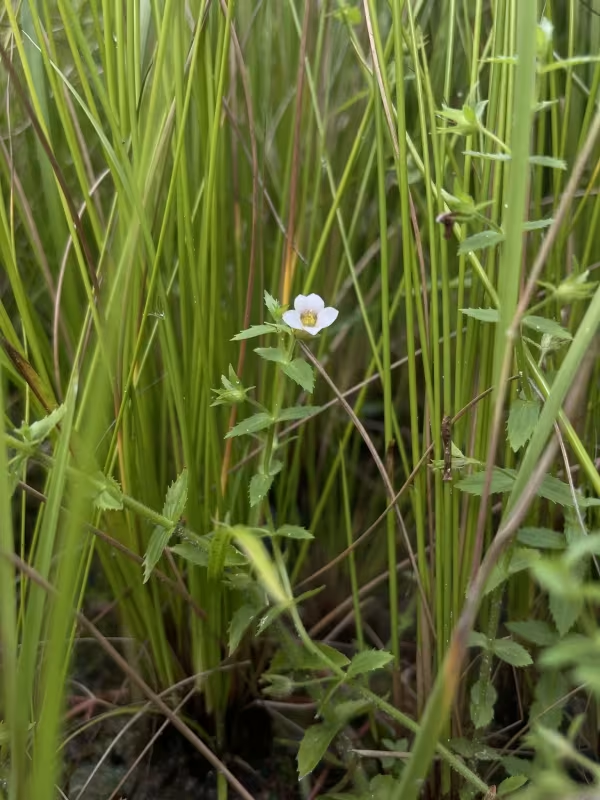
Description
Growing requirements
Gratiola viscidula is a perennial herbaceous plant belonging to the Plantaginaceae family. Originally native to North America, it thrives in wetland habitats, stream margins, and marshy areas where the soil remains consistently moist or submerged.
Botanically, it is characterized by its creeping rhizomes and erect, leafy stems. The leaves are small, lanceolate, and arranged oppositely, creating a dense, bushy appearance that makes it highly popular in aquascaping and natural pond landscaping.
The cultural requirements involve high light intensity to maintain a compact growth habit. Without adequate photons, the stems tend to elongate and lose their characteristic vibrant green coloration, appearing thin and sparse.
Regarding soil and substrate, the plant prefers a nutrient-rich, acidic to neutral medium. In submerged cultivation, a fine-grained substrate rich in macro-nutrients is essential to support the extensive root network and encourage lateral spreading.
Temperature management is critical for Gratiola viscidula, with an optimal range between 18°C and 26°C. Beyond these limits, metabolic processes may slow down, potentially causing stunted growth or structural fragility of the stems.
Main diseases and pests
The primary threat to this species in aquatic systems is the rapid proliferation of filamentous algae. Algal blooms can quickly overgrow the fine-textured leaves, effectively shading the plant and hindering photosynthesis.
Root rot is a major risk factor if the substrate becomes anaerobic. Stagnant water conditions can lead to the accumulation of toxins that damage the rhizome and cause the plant to detach from the substrate.
Pests such as aphids may pose a problem in terrestrial or emersed cultivation settings, particularly during dry seasons when the plant's natural defense mechanisms are weakened by lower humidity.
Nutrient deficiencies, particularly iron (Fe) and potassium (K), result in chlorosis and interveinal yellowing of the leaves. Systematic monitoring of water chemistry is necessary to ensure healthy development.
Sudden environmental shifts, particularly changes in water pH or alkalinity, can trigger leaf abscission. Consistency in maintenance routines is key to preserving the structural integrity and aesthetic value of the culture.