
Peruvian hedgehyssop
Gratiola peruviana
Description
Growing requirements
Gratiola peruviana, commonly known as Peruvian hedgehyssop, is an herbaceous perennial plant belonging to the Plantaginaceae family. Originally native to South America, it has spread throughout various parts of Australia and New Zealand, where it thrives in wetlands.
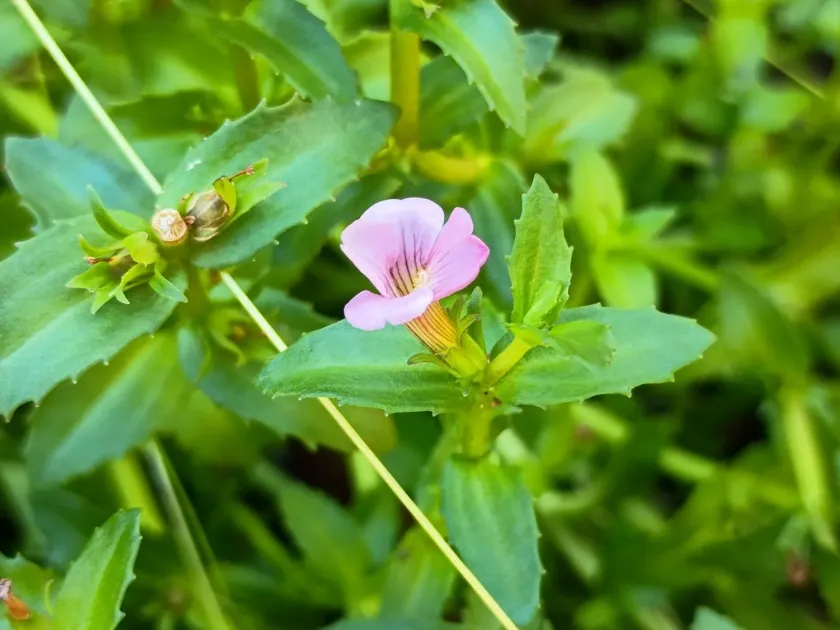
Botanically, the plant is characterized by its square-shaped stems and simple, opposite leaves. The small, tubular flowers, usually white to pale pink, are positioned in the leaf axils, reflecting its adaptation to riparian and damp habitats.
In terms of climate, the species requires consistently moist conditions. It is highly sensitive to desiccation, making the control of substrate moisture the most critical aspect of its cultivation. It prefers areas with mild temperatures avoiding extreme heat or freezing.
Soil requirements for Gratiola peruviana include high organic matter content and a pH that is slightly acidic to neutral. The plant performs best in silt-based or peaty soils that retain moisture without becoming overly stagnant, which could inhibit root respiration.
From an agricultural standpoint, it is cultivated primarily for specialized landscaping in water gardens or protected wetland areas. Its propagation is usually managed through vegetative division or seeds sown directly into saturated soil media.
Main diseases and pests
The primary threats to Peruvian hedgehyssop include various fungal pathogens that favor high-humidity environments. Root rot and leaf spot diseases are prevalent when air circulation is poor and soil saturation levels are excessively high.
Insect pests such as aphids and spider mites can pose a significant challenge. These pests thrive in crowded planting conditions where the plant is stressed due to fluctuating environmental conditions, leading to stunted growth.
Integrated pest management strategies are recommended for this crop. Utilizing biological controls, such as predatory mites, is preferred over synthetic chemicals to protect the sensitive biological balance of the wetland micro-ecosystem.
Maintaining optimal plant spacing is crucial to prevent the spread of soil-borne pathogens. Adequate air movement helps reduce leaf moisture, which is a key factor in limiting the germination of fungal spores on the foliage.
Early detection of signs such as yellowing leaves or wilting is essential for crop survival. Regular scouting ensures that intervention can be targeted rather than broad-spectrum, preserving the health of the entire collection.